
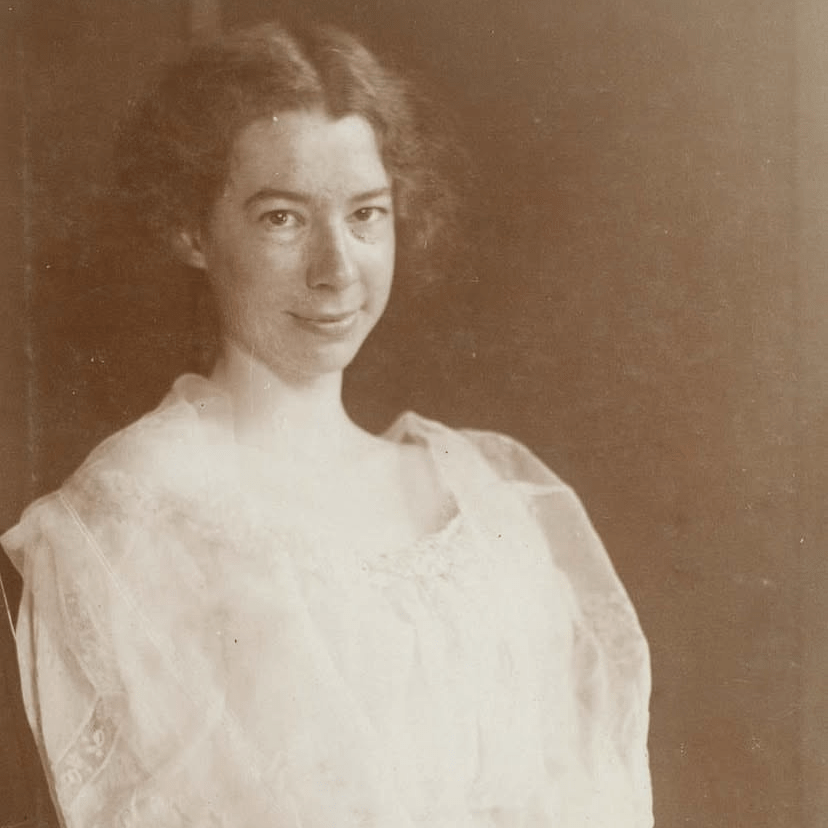
American poet Sara Teasdale was BOTD in 1884. Born in St Louis, Missouri to a prosperous middle-class family, she was an invalid for much of her childhood, eventually attending a private girls’ school aged 10. By her late teens, she lived independently in a house provided by her parents, with an income allowing her to write full-time. In 1904, she joined the feminist art collective The Potters, publishing her poetry in their monthly magazine The Potter’s Wheel. Her debut poetry collection Sonnets to Duse, written in tribute to Italian actress Eleonora Duse, was published in 1907, followed by Helen of Troy and Other Poems in 1911, both of which were critically praised. Proposed to by several men, she eventually married Ernst Filsinger in 1914. After the commercial success of her third collection, Rivers to the Sea, she and Filsinger moved to New York City in 1916, living in an Upper West Side apartment overlooking Central Park. In 1918, she became the first woman to win the Pulitzer Prize for Poetry, for her 1917 collection Love Songs. Her success appears to have put strain on her marriage, with Filsinger spending increasing periods away from New York on business. Depressed and alone, Teasdale began a secret relationship with her much younger friend Margaret Conklin in 1923. In 1929, she informed Filsinger via her solicitors that she wished to divorce him, creating a public scandal. After their divorce, she remained in New York, daringly living together with Conklin in another residence near Central Park. Conklin inspired several of her best-known poems, including Sappho (“There is a quiet at the heart of love / And I have pierced the pain and come to peace”). She committed suicide via a overdose of sleeping pills in 1933, aged 38. Now recognised as one of America’s major poets, her work inspired writers Amy Beach, Marion Cummings and Ray Bradbury, with many of her poems being set to music.
Sara Teasdale

 Super Gays Born on this Day