
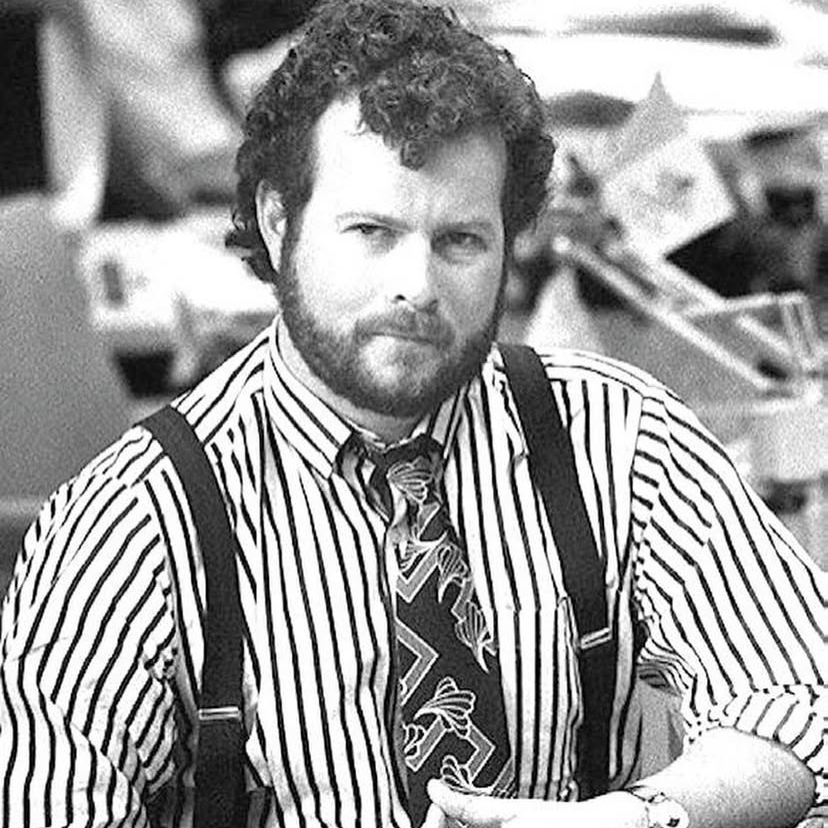
American journalist and activist Randy Shilts was BOTD in 1951. Born in Davenport, Iowa, he studied journalism at the University of Oregon, identifying as gay while an undergraduate and running for student office with the slogan “Come Out For Shilts”. After graduating, he wrote for gay magazine The Advocate before being hired by the San Francisco Chronicle as their first openly gay reporter. He dedicated his career to reporting on the HIV/AIDS epidemic, controversially supporting the closure of San Francisco’s gay bathhouses and criticising the Reagan administration for their failure to respond to the growing health crisis. In 1982, he published his first book The Mayor of Castro Street, a biography of openly gay San Franciscan politician Harvey Milk. He is best known for his 1987 book And The Band Played On, a meticulously researched account of the HIV/AIDS epidemic in the United States. Shilt’s thesis, that AIDS was allowed to happen by an indifferent and homophobic government, brought the extent of the crisis firmly into the public consciousness, and is credited with rallying support for HIV/AIDS funding and activism. The book also sparked significant controversy over Shilt’s identification of Canadian flight attendant Gaëtan Dugas as “Patient Zero”, who was linked to 40 of the first 248 reported cases of AIDS in the United States. Many reviews of the book misquoted Shilts as saying Dugas “brought AIDS to America”, while many Canadian journalists and politicians protested what they claimed as “an offence to their nationhood”. A 2016 study concluded that Dugas could not have been “Patient Zero”, though supported Shilt’s contention that he had played a key role in the transmission of HIV/AIDS in the United States. Despite this error, And the Band Played On is still considered the definitive account of the HIV/AIDS epidemic, and was made into an Emmy-winning TV film. Shilts tested positive for HIV in 1985, but kept his diagnosis a secret until after the publication of And The Band Played On. In 1992, he became seriously ill with AIDS-related pneumonia. Undaunted, he continued with his final book Conduct Unbecoming, an account of discrimination against gays and lesbians in the military, dictating the final chapters while he was in hospital. He died in 1994, aged 42, survived by his partner Barry Barbieri and his family. Amid many posthumous tributes, he was inducted into the Rainbow Honor Walk in San Francisco and the National LGBTQ Wall of Honor at the Stonewall Memorial in New York City, with journalistic awards named in his honour by the Publishing Triangle and The Association of LGBTQ+ Journalists. His life and work was chronicled in the documentaries Reporter Zero and The Journalist of Castro Street, with plans for a feature film biopic announced in 2024.
Randy Shilts

 Super Gays Born on this Day