
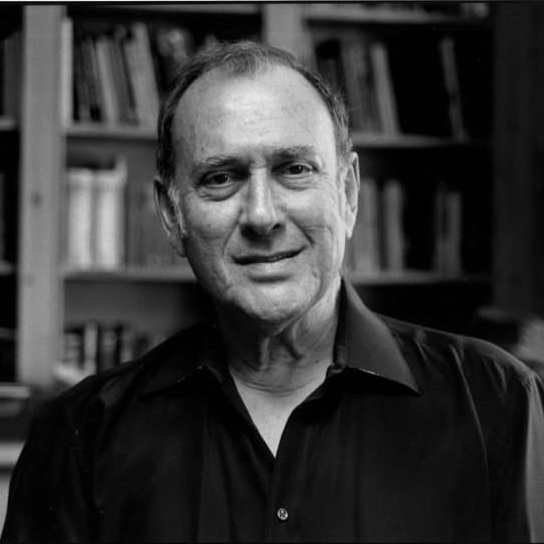
English playwright, screenwriter and actor Harold Pinter was BOTD in 1930. Born in London to a working-class Jewish family, he trained as an actor at the Royal Academy of Dramatic Art and worked as a repertory actor. He began writing plays in the 1950s, finding initial success with the comic double bill The Room and The Dumb Waiter. His debut full-length play The Birthday Party, produced in 1958, puzzled audiences with its themes of paranoia, sexual violence and fragmented, pause-infused dialogue, closing after a week. Two years later, he had a huge success with The Caretaker, a sinister drama about the power struggles between three isolated men sharing a dilapidated flat. His “comedies of menace” made him the foremost exponent of the newly-fashionable Theatre of the Absurd, culminating in his 1965 play The Homecoming, performed to great success in London and New York and winning the Tony Award for Best Play. While seldom referred to expressly, sexual anxiety and fear of latent homosexuality was a motivating force in many of his plays, haunting his male characters’ frustrated interactions. In the 1960s, he shifted his focus to screenwriting, collaborating with Joseph Losey on the film The Servant, a disturbing drama about the co-dependent and homoerotic relationship between an upper-class man and his scheming butler, masterfully played by Dirk Bogarde. He reunited with Losey and Bogarde for the 1967 film thriller Accident, and again with Losey for a successful adaptation of L. P. Hartley’s novel The Go-Between, which won the Palme d’Or at the Cannes Festival. He also had success with his 1981 adaptation of John Fowles’ novel The French Lieutenant’s Woman, though his screenplay of Margaret Atwood’s dystopian novel The Handmaid’s Tale was more coolly received. (A long-gestating screenplay for Marcel Proust‘s novel À la recherche du temps perdu was, famously, never filmed). In later life, he returned to acting, playing chilly patriarchs in Patricia Rozema‘s film of Jane Austen’s Mansfield Park and Mike Nichols’ TV film of Margaret Edson’s play Wit. In 2005, he was awarded the Nobel Prize for Literature, praised by the Nobel Committee for “uncover[ing] the precipice under everyday prattle and forc[ing] entry into oppression’s closed rooms.” Pinter married actress Vivien Merchant in 1956, with whom he had a son. The relationship ended in divorce after Pinter’s long-term affair with the broadcaster Joan Bakewell, which formed the basis for his much-lauded 1978 play Betrayal. He married novelist and biographer Antonia Fraser in 1980, remaining with her until his death in 2008, aged 78. The adjective “Pinteresque” is used to describe writing “characterised by implications of threat and strong feeling produced through colloquial language, apparent triviality, and long pauses.” He earns Honorary SuperGay status for lifting the lid on the taboo subject of homosexuality long before it was fashionable, and for eloquently describing the psychology of oppression and social isolation.
Harold Pinter

 Super Gays Born on this Day