
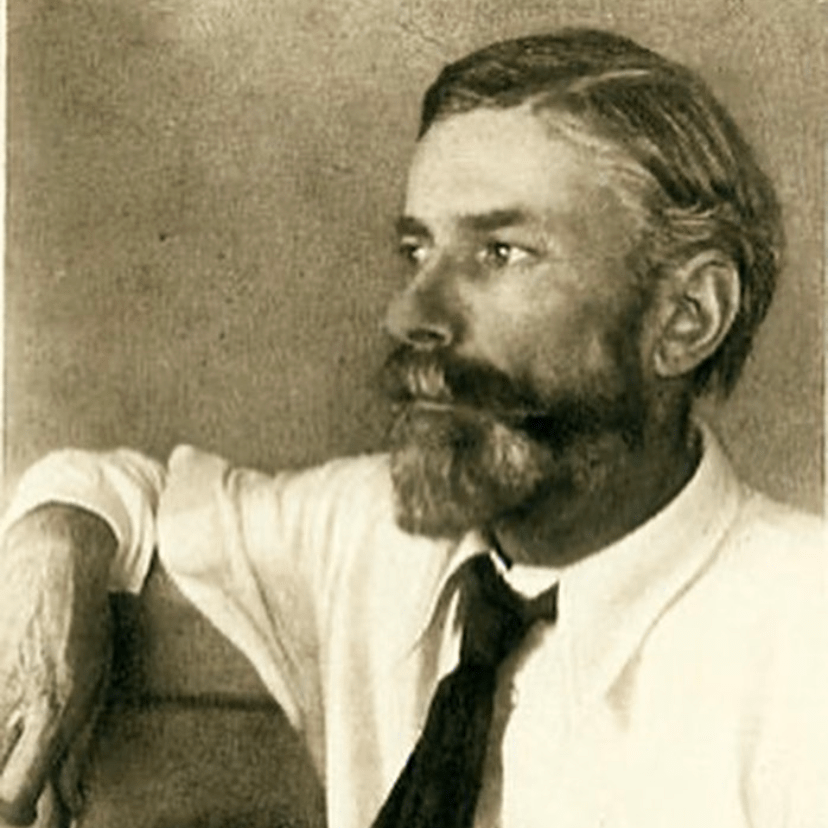
English writer, activist and sexologist Edward Carpenter was BOTD in 1844. Born in Brighton to a middle-class family, he studied theology at Cambridge University and was ordained as an Anglican curate. Disillusioned with the church, and inspired by the utopian and homoerotic writings of Walt Whitman, he moved to Yorkshire, lecturing at a community college and pursuing relationships with working-class men. An inheritance from his father allowed him to buy a small farm in Derbyshire, where he built a house and lived with a series of boyfriends. He published extensively through the 1880s, advocating Socialism, vegetarianism and a return to rural craftsmanship. After travelling in India, he met George Merrill, a young working-class man who became his life partner. Their relationship inspired close friend E. M. Forster to write Maurice, a drama about a middle-class man who falls in love with a young gamekeeper, ending with the lovers committing to each other. During the 1890s, Carpenter wrote extensively about sexuality, notably in The Intermediate Sex where he proposed a Uranian model for homosexuality, based on the man-boy relationships of the Ancient Greeks. He befriended and corresponded with most of the leading liberals of his day, including Havelock Ellis, Mahatma Gandhi and Labour Party leaders Keir Hardie and Ramsay MacDonald. His social campaigning for homosexual rights was largely overshadowed by the trial and conviction of Oscar Wilde, establishing homosexuality as a criminal identity for a generation and pushing many of his fellow campaigners back into the closet. Grief-stricken over the death of Merrill, he died in 1929, aged 84. Posthumously dubbed “the gay godfather of the British left”, his writing influenced Leo Tolstoy, Aldous Huxley, Radclyffe Hall and Emma Goldman, and anticipated the environmental and animal rights movements.
Edward Carpenter

 Super Gays Born on this Day