
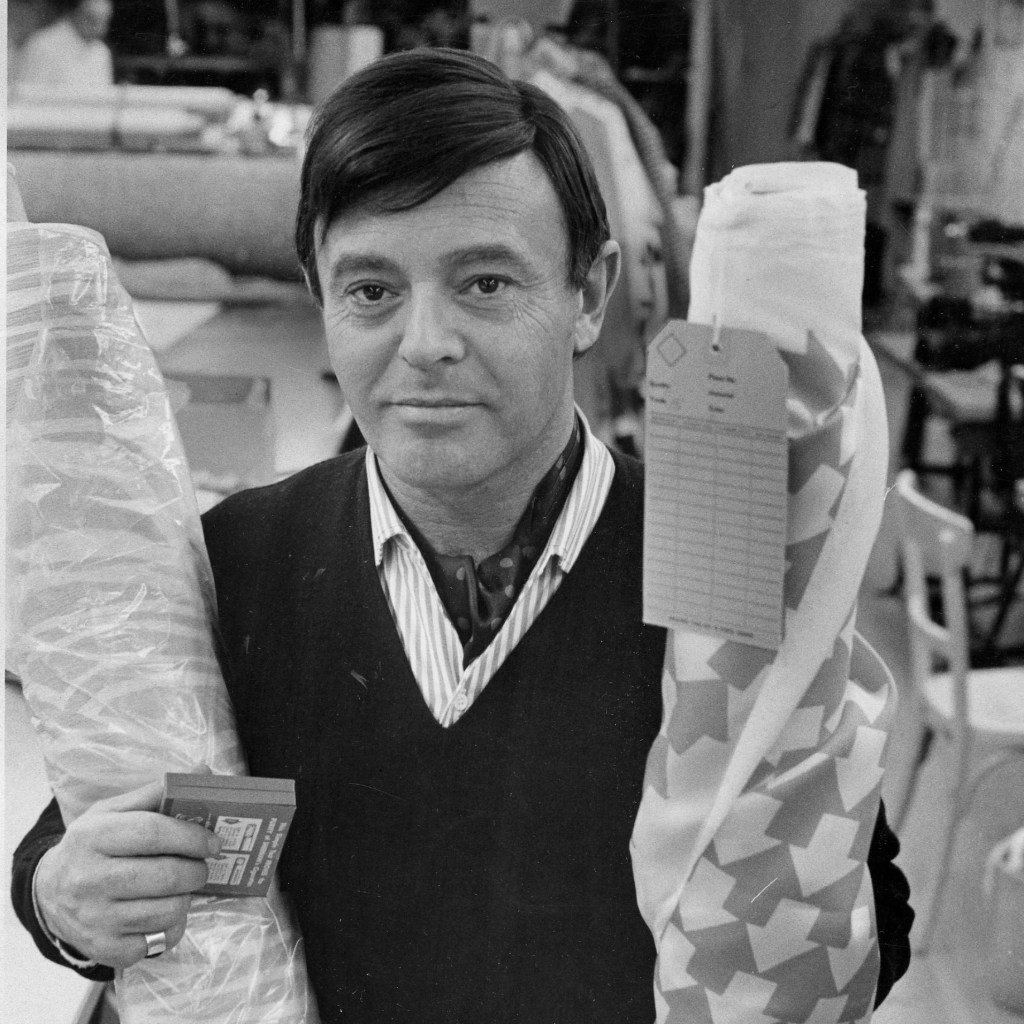
Austrian-American fashion designer Rudi Gernreich was BOTD in 1922. Born in Vienna to a wealthy industrialist family, his father committed suicide when he was eight. He was raised by his mother and aunt, who owned a dress shop, and began designing clothes in his early teens. After the Nazi annexation of Austria in 1938, Gernreich and his mother immigrated to the United States, settling in Los Angeles and earning money by washing corpses in a morgue. He studied art at Los Angeles City College and the Los Angeles Art Center School, apprenticing with a womenswear boutique. In 1942, he became a dancer and designer with the Lester Horton Modern Dance Troupe, leaving after six years to pursue a career in fashion design. Ignoring the formalism of Paris-based designers Christian Dior and Cristóbal Balenciaga, he launched a range of swimwear and mini-skirts, embracing the sun-kissed informality of Los Angeles beach culture. His designs chimed with the growing sexual freedoms of the 1960s, he removed corsetry from women’s swimwear, using elasticised wool knits that clung to the body. He achieved international fame (and notoriety) for his 1964 “monokini”, a topless one-piece swimming costume with a shoestring halter-neck. Condemned by the Vatican, the Kremlin and religious conservatives, the design landed him on front cover of Time magazine. In 1966, he became one of the first American designers to sell his clothing lines in a chain store, significantly increasing his brand exposure and profit margins. An early advocate of unisex clothing, he designed translucent blouses and brassieres, men’s suits and hats for women and clothes made from vinyl and plastic. He also became well-known for his futuristic costumes for cult English sci-fi TV series Space: 1999, and made a bizarre appearance as himself in the 1960s TV series Batman opposite Eartha Kitt. Openly gay since forever, Gernreich had a relationship with activist Harry Hay in 1950 and became a founding member and financial supporter of Hay’s gay rights organisation the Mattachine Society. Following his arrest and conviction for homosexual offences in 1952, he remained in the closet for the rest of his life, citing concerns that coming out would negatively affect his business. He was in a discreet long-term relationship with academic Oreste Pucciani from 1953 until his death in 1985, aged 62. Now considered one of the 20th century’s most innovative designers, his work became hugely influential on contemporary fashion houses including Commes des Garçons, who have recreated many of his original designs.
Rudi Gernreich

 Super Gays Born on this Day