
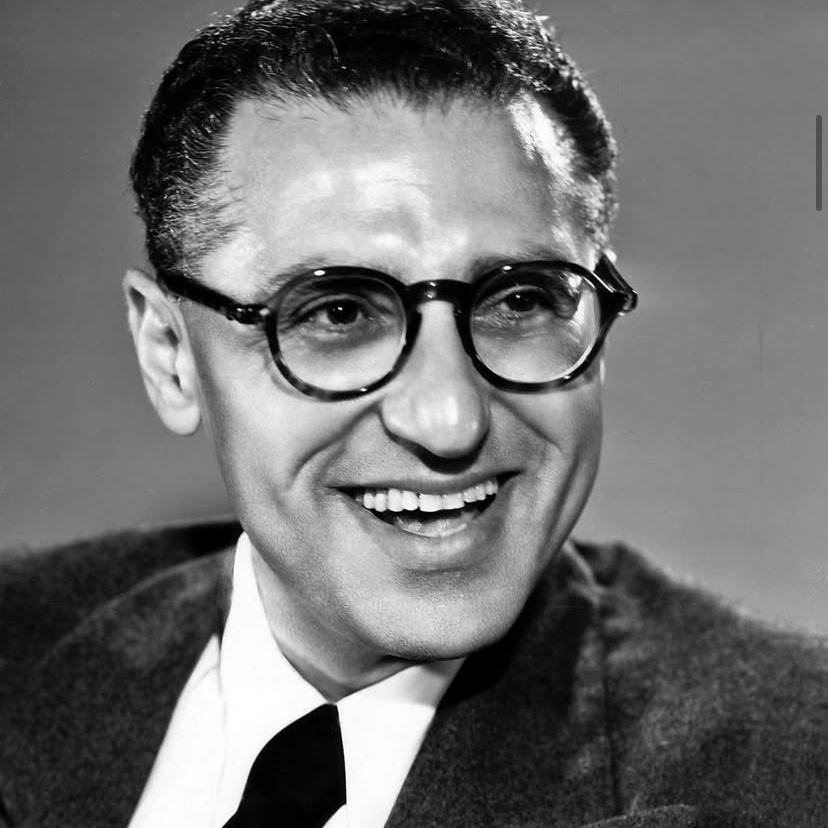
American filmmaker George Cukor was BOTD in 1899. Born in New York City, he took an early interest in theatre, and began his professional career in 1919 as stage manager for a theatre troupe in Chicago. He began directing plays on Broadway throughout the 1920s, and was signed to a studio contract in Hollywood in 1929. He worked as the dialogue director for the Oscar-winning All Quiet on the Western Front, making his solo directorial debut in Tarnished Lady starring Tallulah Bankhead. He achieved major box-office success with 1933’s Little Women, an adaptation of Louisa May Alcott‘s novel starring a boyish Katharine Hepburn, establishing his reputation for deft comedy and sensitive direction of actresses. He scored further successes with a star-studded adaptation of David Copperfield, and directed Greta Garbo in her greatest role as a dying courtesan in Camille. A regular collaborator with Hepburn, he paired her with Cary Grant to great success in Sylvia Scarlett (featuring Hepburn in man-drag), the romantic drama Holiday and the screwball comedies Bringing Up Baby and The Philadelphia Story. Initially hired to direct the Civil War epic Gone With the Wind, he was fired (reputedly at the request of its star Clark Gable, who was concerned that Cukor would reveal Gable’s bisexual past). Undeterred, Cukor privately coached Vivien Leigh and Olivia de Havilland on their performances, and scored another hit with the all-female bitch-fest The Women starring Norma Shearer, Joan Crawford, Rosalind Russell, Paulette Goddard and Hedda Hopper. In the 1940s, he helped resurrect Hepburn’s career after being declared “box office poison”, directing her and Grant in The Philadelphia Story and later in Adam’s Rib, the first of her collaborations with Spencer Tracy. During World War Two, he joined the US Army, making training films with fledgling screenwriter Arthur Laurents. He returned to Hollywood, burning through the 1940s with high-profile projects including Gaslight with Ingrid Bergman, Edward My Son with Deborah Kerr, Born Yesterday with an Oscar-winning Judy Holliday and Bhowani Junction starring Ava Gardner. His 1954 musical remake of A Star is Born became infamous for production delays, budget blow outs, a three-hour running time and its star Judy Garland‘s frequent illnesses. The resulting film was popular with audiences but failed to recoup its excessive production costs, though has since been recognised as one of the greatest Hollywood musicals. During the 1960s, Cukor worked with Marilyn Monroe in the comedies Let’s Make Love and Something’s Gotta Give, before scoring his greatest commercial success with the 1965 film of Lerner & Loewe‘s musical My Fair Lady. A box office juggernaut, it won eight Oscars including best picture and Cukor’s first (and long-overdue) prize for best director. Cukor’s homosexuality was an open secret in Hollywood, and he became infamous for his Sunday afternoon pool parties, entertaining closeted movie stars and rough-trade boyfriends. His closest relationship appears to have been with George Towers, whom he eventually adopted, staying close even after Towers’ marriage. He continued directing until his death in 1983 aged 83. Now considered one of the greatest directors of Hollywood’s Golden Age, the queer resonances of his films with Hepburn and colourful private life has been extensively discussed by biographers and film historians.
George Cukor

 Super Gays Born on this Day