
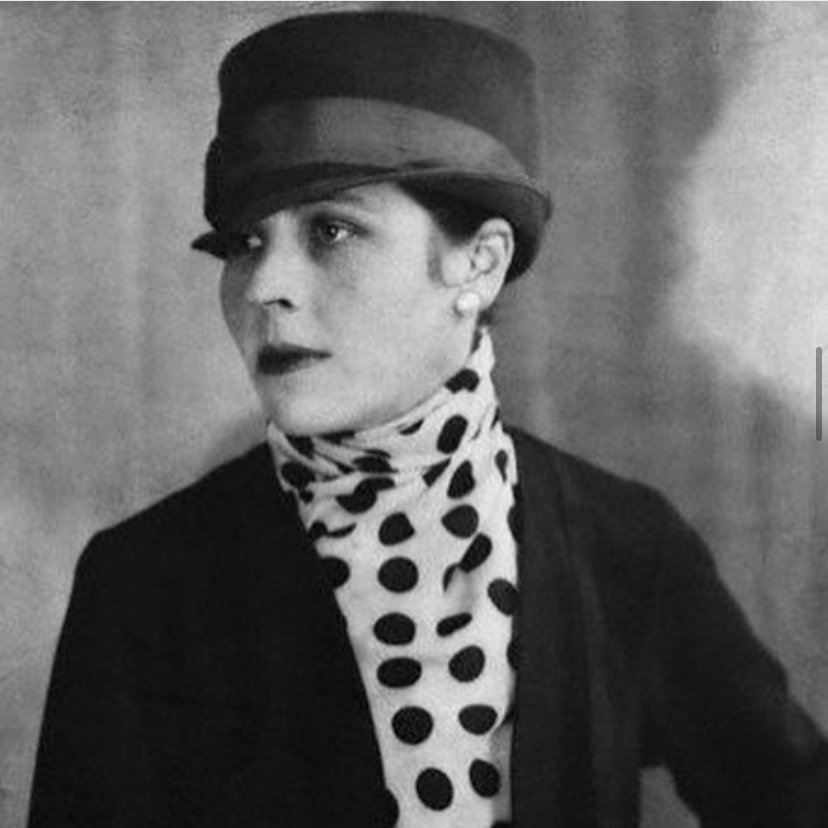
American writer Djuna Barnes was BOTD in 1892. Born in a log cabin in Storm King Mountain in Orange County, New York, her bohemian family espoused polygamy and free love, moving in his mistress to live with the family. She spent her childhood looking after her younger siblings, and was home-schooled by her father, with whom she may have had an incestuous relationship. At 18, she was married to a 56-year-old family friend, staying together for only a few months. In 1912, she moved to New York, studying art at the Pratt Institute and the Art Student’s League. The pressures of supporting her family led her to become a freelance journalist and illustrator, working for several years for the New York Press and The World and McCalls. She also began publishing short stories in the New York Morning Telegraph and pulp fiction magazines, socialising with a largely homosexual artistic circle including Edmund Wilson and Berenice Abbott. She moved to Paris in 1921 on an assignment for McCalls, immersing herself in the city’s literary milieu, befriending James Joyce and joining the lesbian coterie of society hostess Natalie Clifford Barney, who became her lifelong friend and patron. Her 1928 debut novel Ryder, a satirical family epic with a fluid narrative style inspired by Joyce’s Ulysses, was a bestseller, allowing her to buy an apartment in Paris. Her next novel Ladies Almanack, chronicling the bed-hopping of Barney’s friendship circle and containing unflattering portraits of Barney, Romaine Brooks, Élisabeth de Gramont, Dolly Wilde, Radclyffe Hall, Una Vincenzo, Janet Flanner and Mina Loy, was published privately. Barnes’ affairs with sculptor Thelma Wood and heiress Henriette Metcalf appeared in thinly-disguised form in her 1936 novel Nightwood, a Gothic portrait of Paris’ lesbian underworld. Admired by critics including T. S. Eliot, who arranged for its publication in Britain, its poor sales and Barnes’ alcoholism left her in poverty, and she was despatched by patroness Peggy Guggenheim back to New York. She lived as a recluse for the rest of her life, drinking heavily and working on an unpublished verse play called The Antiphon. Her neighbour, the poet e e cummings, checked on her periodically by yelling out his window “Are you still alive, Djuna?” She attracted a number of younger fans, including Carson McCullers and Anaïs Nin, though ignored their offers of friendship and support. She died in 1982, aged 90. Largely forgotten at her death, her work, particularly Nightwood, has since been reclaimed by feminist and queer scholars, admired for its experimental prose and vivid portrait of pre-liberation era lesbian culture.
Djuna Barnes

 Super Gays Born on this Day