
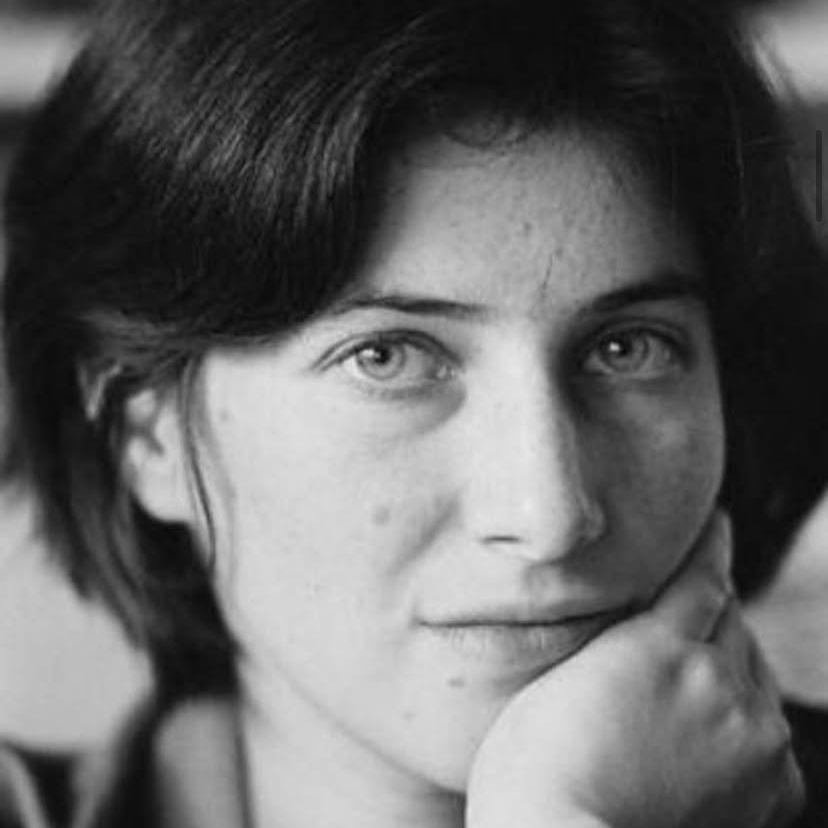
Belgian filmmaker Chantal Akerman was BOTD in 1950. Born in Brussels to Polish Holocaust survivors, she formed a close bond with her mother, who encouraged her to pursue a career over marriage. Inspired by the films of Nouvelle Vague director Jean-Luc Godard, she studied filmmaking at the Institut national supérieur des arts du spectacle et des techniques de diffusion, dropping out after her first year to make the short film Saute ma ville. In 1971, she moved to New York City, becoming exposed to the experimental films of Andy Warhol and Jonas Mekas, and collaborating on documentary films with cinematographer Babette Mangolte. Her 1974 debut feature Je, Tu, Il, Elle (I, You, Him, Her) turned heads for its frank depiction of women’s sexuality, featuring a lesbian sex scene filmed in an uninterrupted 10-minute take. She is best known for her 1975 film Jeanne Dielman, 23 quai du Commerce, 1080 Bruxelles, a three-and-a-half hour drama about a working-class widow and mother (played by Delphine Seyrig) who makes a living as a sex worker. Filmed almost entirely in a cramped apartment, with long uninterrupted takes and minimal dialogue, it brought the monotony and drudgery of “women’s work” into startling focus, creating a visual correlative for the protagonist’s isolation and constrained economic circumstances. On its release, The New York Times called Jeanne Dielman “the first masterpiece of the feminine in the history of the cinema”. Akerman’s other notable works include News from Home, a series of New York street scenes set against Akerman reading letters from her mother; Nuit et jour (Night and Day) which competed in the Venice Film Festival; and Le captive (The Captive), an adaptation of Marcel Proust‘s novel La Prisonnière. In 2011, Akerman became a film studies lecturer at the City University of New York, and also taught at the European Graduate School in Switzerland. She was in a long-term relationship with American cellist Sonia Wider-Atherton, who appeared in a number of her films including La paresse (Sloth) and Un divan à New York (A Couch in New York). Akerman’s final film No Home Movie, a series of conversations with her mother, was recorded shortly before the latter’s death in 2014. After being hospitalised for depression, Akerman committed suicide in 2015, aged 65. Now considered one of the 20th century’s most influential directors, her work has inspired filmmakers Barbara Hammer, Claire Denis, Sally Potter, Michael Haneke, Todd Haynes, Lukas Dhont, Anna Boden and Ryan Fleck. In 2022, Jeanne Dielman was voted the Greatest Film of All Time in Sight & Sound magazine’s decennial poll of filmmakers and critics, becoming the first female-directed film to top the list.
Chantal Akerman

 Super Gays Born on this Day