
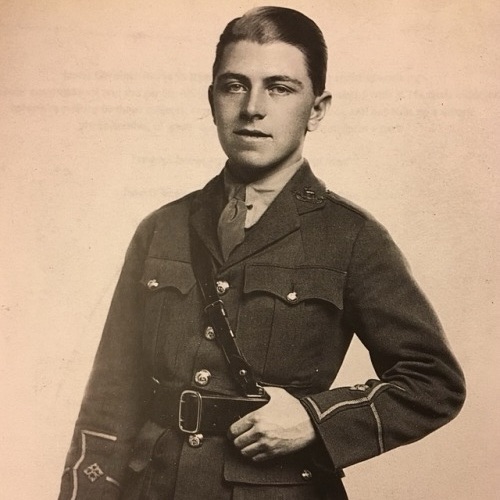
English architect and photographer Montague Glover was BOTD in 1898. Born in Leamington Spa, he enlisted in the Army during World War One, and was commissioned into the Warwickshire Regiment. Posted in Italy in 1918, he was awarded the Military Cross for bravery. After the war, Glover trained as an architect. In the 1920s, he worked with the Commonwealth War Graves Commission and spent three years in Northern France designing and memorials for dead soldiers. He returned to London in the 1930s, owning a flat in central London facing Wellington Barracks, the home of the Royal Guard. Openly gay since forever, he had affairs with a number of soldiers and developed a keen interest in rough trade, picking up builders, road-workers, dockers, labourers, sailors and rent boys. A keen amateur photographer, he took thousands of photos of his lovers, often dressing them in military uniforms and tight underwear. In 1930, he formed a relationship with Ralph Hall, a working-class man from London’s East End and 15 years his junior. Hall lived with Glover under the guise of being his manservant. In World War Two, Hall was drafted into the Royal Air Force, sending Glover hundreds of love letters over his four year service. In 1953, they moved to Little Windovers, a house Glover designed in the village of Balsall Heath in Warwickshire. They lived together happily for another 30 years, until Glover’s death in 1983, aged 85. After Hall’s death in 1987, the house and its contents were put up for sale by his relatives. Glover’s extensive collection of photographs, diaries and scrapbooks of homoerotic images and his letters to and from Hall were purchased by collector James Gardiner, who published them in his 1992 book A Class Apart – The Private Pictures of Montague Glover. His work is now recognised as a valuable record of gay life in England before the legalisation of homosexuality.
.

 Super Gays Born on this Day