
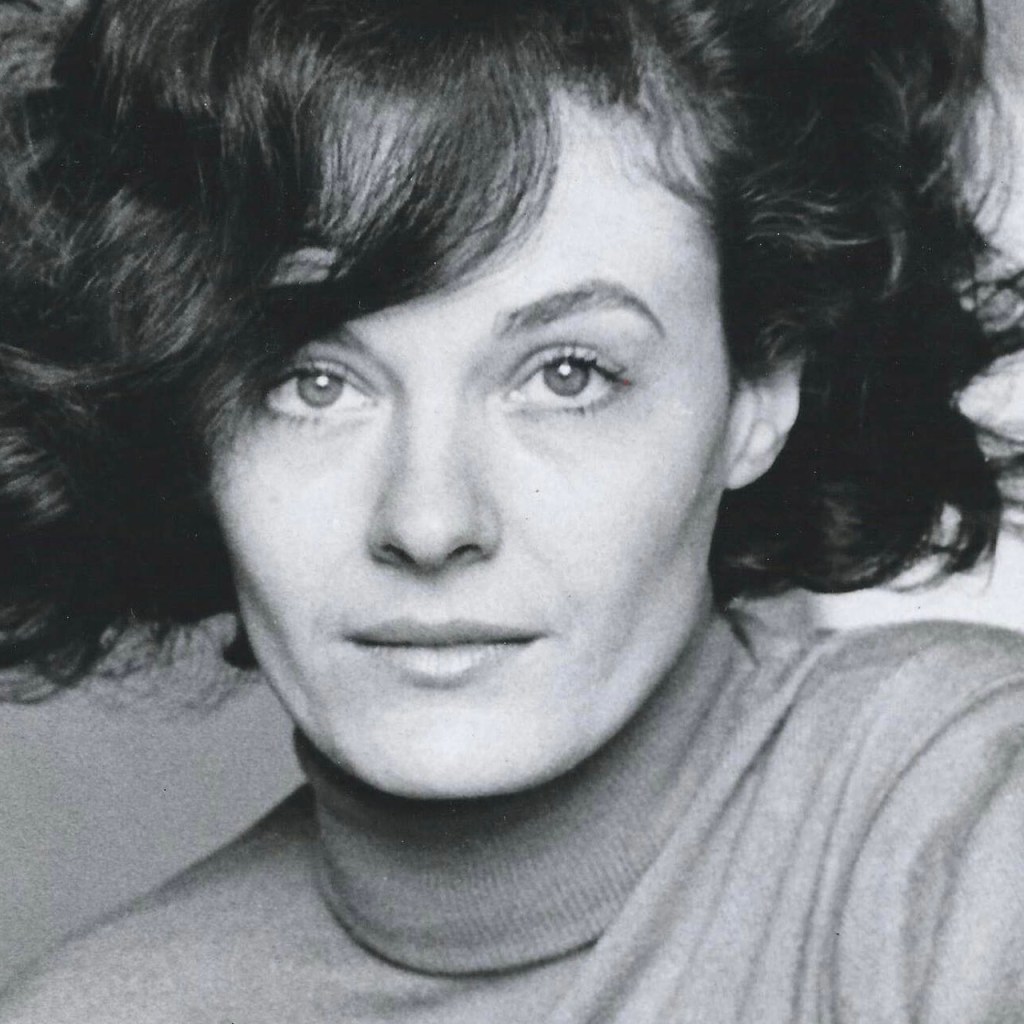
Lebanese-French actress and filmmaker Delphine Seyrig was BOTD in 1932. Born in Beirut to French-Swiss parents, she and her family moved to New York when she was ten. She returned to Lebanon in the late 1940s, and was educated at the Collège Protestant de Jeune Filles. She became interested in acting, studying at the Comédie de Saint-Étienne and the Actors Studio in New York. In 1961, she starred as an unnamed woman in Alain Resnais’ 1961 art film L’Année dernière à Marienbad (Last Year at Marienbad), launching her career. Fluent in French, English and German, she became one of the foremost actresses of post-war European cinema, typically choosing independent films and avant-garde directors over studio-based projects. Her astonishing resumé includes François Truffaut’s Baisers volés (Stolen Kisses), Joseph Losey‘s Accident and A Doll’s House, Jacques Demy‘s Peau d’âne (Donkey Skin) and Luis Buñuel’s Le Charme discret de la bourgeoisie (The Discreet Charm of the Bourgeoisie). Largely uninterested in Hollywood, she had a notable role in Fred Zinnemann’s 1973 spy thriller The Day of the Jackal. She worked regularly with female filmmakers, notably Marguerite Duras, Ulrike Ottinger and Chantal Akerman, using her star status to help their films get financed and distributed. Her performance as a disaffected housewife in Akerman’s 1975 film Jeanne Dielman, 23 quai du Commerce, 1080 Bruxelles was highly acclaimed, becoming one of her signature roles. In 1975, she co-formed the feminist video collective Les Insoumuses (The Disobedient Muses), producing and co-directing a 1976 adaptation of Valerie Solanas‘ radical feminist SCUM Manifesto, and the 1981 documentary Sois belle et tais-toi (Be Pretty and Shut Up), featuring interviews with Shirley MacLaine, Maria Schneider and Jane Fonda discussing their experiences of sexism in the film industry. Alongside her film career, Seyrig was prominently involved in left-wing and feminist political movements. In 1971, she signed the Manifeste des 343 Femmes (Manifesto of the 343 Women), publicly declaring she had undergone an illegal abortion, as part of a campaign to legalise abortion in France. In later life, she helped establish the Centre audiovisuel Simone-de-Beauvoir in Paris, an archive of women’s filmed and recorded work. Seyrig was briefly married to American painter Jack Youngerman, with whom she had a son. She earns La SuperGay Honnoraire (Honorary SuperGay) status for her commitment to feminist representation, her collaborations with queer filmmakers and her highly desirable combination of intelligence, beauty and mystique. She died in 1990 of cancer, aged 58. In 2022, Jeanne Dielman was voted the Greatest Film of All Time in Sight & Sound magazine’s decennial poll of filmmakers and critics, re-igniting interest in Seyrig’s life and work.
Delphine Seyrig

 Super Gays Born on this Day