
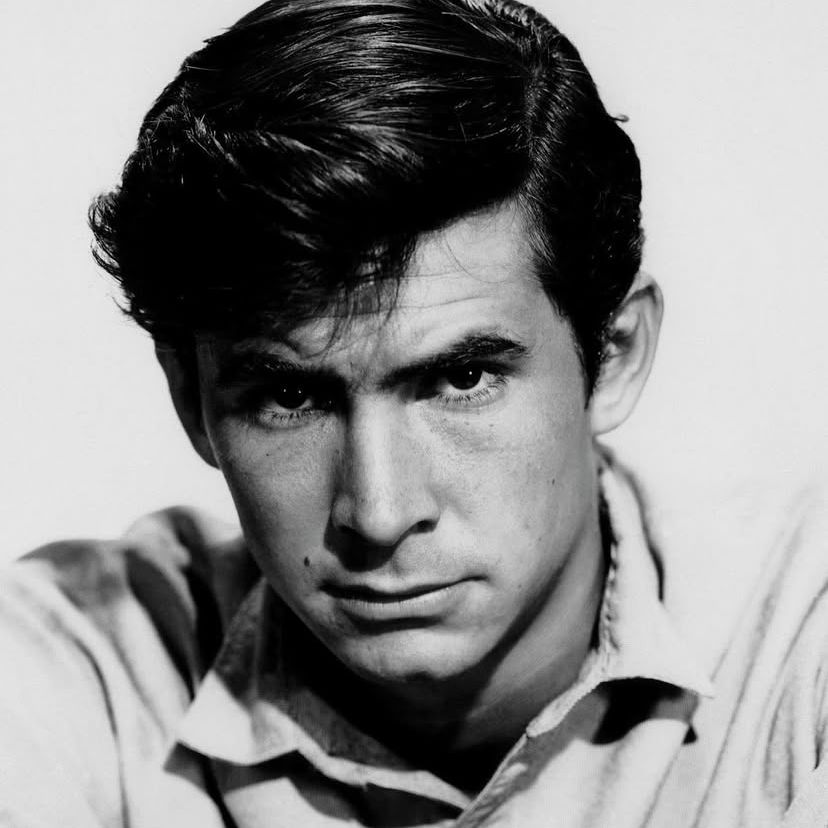
American actor Anthony Perkins was BOTD in 1932. Born in New York to a theatrical family, he was raised by his widowed mother (whom he later accused of sexual abuse) and her lesbian partner. He attended Rollins College, leaving after a witch-hunt of gay students, and transferred to Columbia University. After playing in regional theatre, he became a star in the 1954 Broadway production of Tea and Sympathy, playing a sissy who is “cured” of his suspected homosexuality by an affair with a married woman. Offered a Hollywood contract, he turned heads with roles in Friendly Persuasion and Fear Strikes Out. Concerned that he was too effeminate, Hollywood producers pushed him into romantic roles opposite Audrey Hepburn, Shirley MacLaine and Elizabeth Taylor, and pressured him to end his relationship with actor Tab Hunter. Perkins’ anxiety about his queerness was typically displayed in his work, notably in his best-known role, the mummy’s boy turned cross-dressing serial killer Norman Bates in Alfred Hitchcock’s Psycho. Dissatisfied with his Hollywood career, he relocated to Europe in the 1960s, working with Ingrid Bergman, Sophia Loren, Orson Welles and Claude Chabrol, and winning the Cannes Best Actor prize for Goodbye Again. In 1971, he ended a long term relationship with dancer Grover Dale and started psychoanalysis and electro-shock therapy to “cure” himself of his homosexuality. He eventually married and had two children, but pursued clandestine relationships with men. His latter career was a mixture of success (the Broadway play Equus), camp bachelors (Murder on the Orient Express) and some truly terrible Psycho sequels. In 1990, he was diagnosed with AIDS, a story that his nurse leaked to the tabloids. Though he never came out in his lifetime, he expressed support for LGBT rights and made substantial donations to HIV charities. He died in 1992, aged 60, shortly after making a public statement about his illness.
Anthony Perkins

One response to “Anthony Perkins”
-
It’s a shame he put himself through all that. It’s beyond unfortunate that society was, and still is, so narrow minded and bigoted.
LikeLike

 Super Gays Born on this Day