
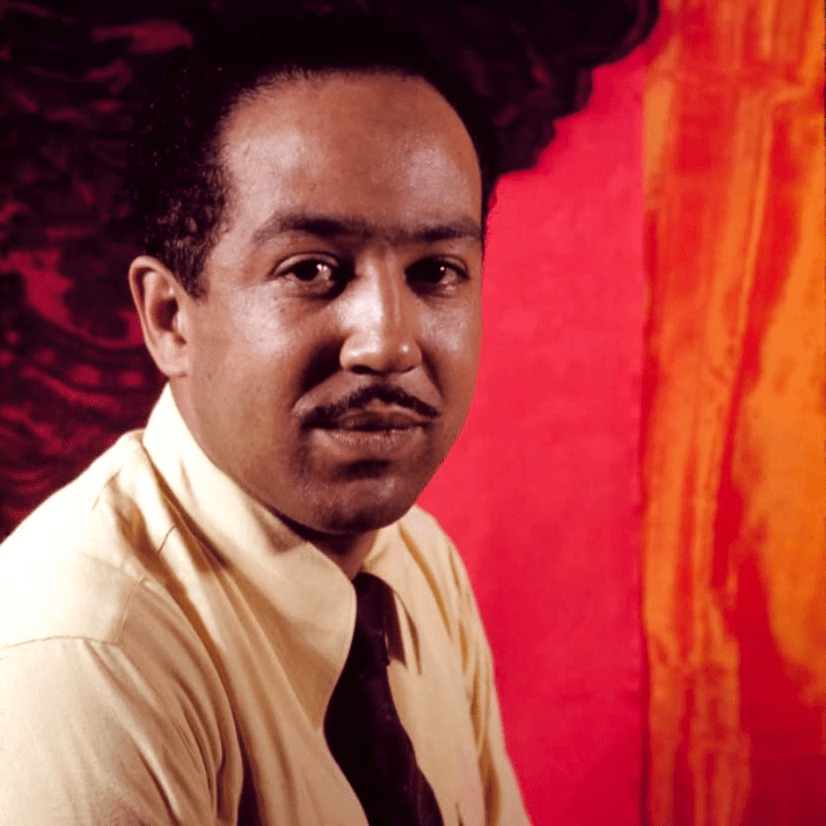
American writer and activist Langston Hughes was BOTD in 1901. Born in Joplin, Missouri, he was raised in Kansas by his grandmother after his parents’ separation. He moved to New York to study at Columbia University, but left a year later to due campus racism. He became a crewman on board a ship, travelling to Europe and Africa and spending time in Paris. Returning to New York, he settled in Harlem, publishing his first book of poems The Weary Blues in 1926, inspired by Black jazz and blues rhythms. He became one of the central figures in the Harlem Renaissance, befriending writers Zora Neale Hurston, Carl Van Vechten and Nella Larsen, and arguing for an independent uniquely Black literature. His work became more politicised during the 1930s, addressing racist injustice, advocating for the defendants in the Scottsboro Case, and working as a newspaper correspondent during the Spanish Civil War. However, his decision to testify at the House Un-American Activities Committee cost him his friendships with W. E. B. Du Bois and Paul Robeson. He became hugely influential on the 1960s Civil Rights movement, though his legacy was controversial. While Nina Simone embraced him as a mentor and collaborator, James Baldwin chastised him for reducing Black identity to “a pleasant Negro simplicity”. Hughes never spoke publicly about his sexuality, though his poetry and short stories frequently referenced attraction to men. Little is known about his intimate relationships, apart from a brief, unhappy affair with the academic Alain LeRoy Locke. He died in 1967, aged 66. Isaac Julien’s 1989 documentary Looking for Langston reclaimed Hughes as a Black gay icon, arguing that his sexuality had been historically ignored or downplayed.
Langston Hughes

 Super Gays Born on this Day