
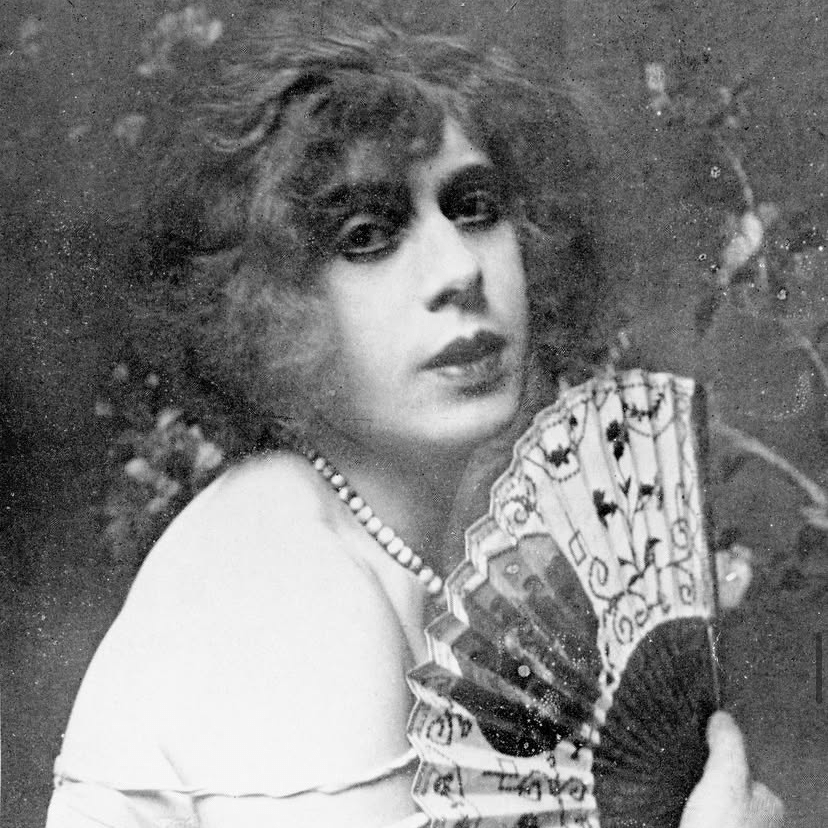
Danish painter and trans pioneer Lili Ilse Elvenes, also known as Lili Elbe, was BOTD in 1882. Born in Vehle, she studied painting at the Royal Danish Academy of Fine Arts in Copenhagen, and began exhibiting work under her birth name Einar. In 1904, Elvenes married fellow student Gerda Gottlieb, and worked as commercial illustrators. After dressing in women’s clothes as a replacement for Gottlieb’s regular model, Elvenes began doing so regularly, eventually renaming herself Lili. The couple travelled through Italy and France before settling in Paris in 1912, where they lived in an open marriage: Elvenes dressed and lived openly as a woman, posing as Gottlieb’s sister, while Gottlieb pursued a number of lesbian affairs. Gottlieb became famous for her portraits of Lili, and they became socialites, entertaining extensively. In 1930, Elvenes went to Germany to undergo the first of four gender reassignment surgeries, under the supervision of sexologist Magnus Hirschfeld. Later that year, a Danish court annulled their marriage, and Elvenes applied successfully to have her gender and name legally amended. Her story became a media sensation and was widely reported in the press. After the annulment, Elvenes and Gottlieb became estranged, and Elvenes formed a relationship with French art dealer Claude Lejeune. Determined to get married and have children, Elvenes underwent vaginoplasty surgery, but died three months later following post-surgical infection. She was 48. Elvenes’ memoir Man into Woman: An Authentic Record of a Change of Sex was published posthumously in 1933. Her story inspired the 2015 biopic The Danish Girl, starring Eddie Redmayne as Lili. The film was widely criticised for casting a cis-gendered actor as a trans character, and for omitting details of Gottlieb’s bisexuality. The Danish LGBT film festival MIX Copenhagen awards four “Lili” prizes each year, named in Elvenes’ honour.
Lili Elbe

 Super Gays Born on this Day