
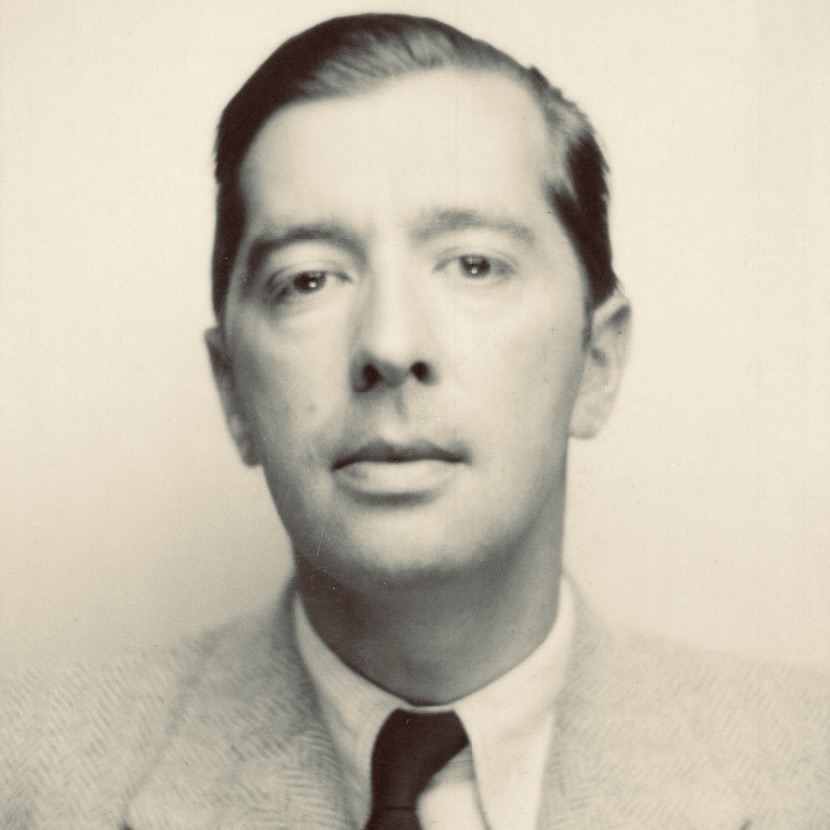
Franco-Swiss photographer and filmmaker Marc Allégret was BOTD in 1900. Born in Basel, he was raised in Paris, where his father was a Protestant missionary. At the outbreak of World War One in 1914, Allégret’s father became an chaplain for the French Army, leaving Marc and his siblings in the care of his former student, writer and celebrity pederast André Gide. The following year, Gide and Allégret are thought to have become lovers. Gide left his wife in 1918, fleeing to London with the 15-year-old Allégret, igniting a national scandal in France. They remained a couple for the next decade, returning to France after the war where Allégret trained as a lawyer. In 1927, Allégret accompanied Gide on a trip to French Equatorial Africa, recording their travels on film, released as the documentary Voyage au Congo (Travels in the Congo). Its success inspired him to pursue a career as a filmmaker, collaborating with Dadaist artist Marcel Duchamp on a short film, and taking over the direction of the 1930 feature film Le Blanc et le Noir. His debut feature film, the musical comedy Mam’zelle Nitouche, was released in 1931. While still with Gide, Allégret fell in love with Élisabeth van Rysselberghe, with whom he attempted unsuccessfully to have a child. (Gide subsequently had a one-night stand with van Rysselberghe, who subsequently gave birth to his daughter). After separating from Gide in 1928, Allégret pursued a series of affairs with women, notably the actress Simone Simon, whom he directed to great success in the film Lac aux dames. An astute spotter of young talent, he gave Josephine Baker and Jean Gabin their first film roles in the 1934 film Zouzou, and made stars of Jean-Louis Barrault in Les Beaux Jours and Michèle Morgan in Gribouille. During World War Two, he directed several comedies, including Félicie Nanteuil and Les Petites du quai aux fleurs (The Girls of the Flower Wharf). though had to abandon the adventure film Le Corsaire (The Corsican) with Charles Boyer. He resumed his career after the war, directing most of the major stars of French cinema, including Jeanne Moreau, Danielle Darrieux, Brigitte Bardot, Annie Giradot, Jean-Paul Belmondo, Alain Delon, Catherine Deneuve and Johnny Hallyday, and mentored fledgling filmmaker Roger Vadim. His work fell out of fashion in the 1960s, and he shifted into directing documentaries. His final film Le Bal du comte d’Orgel (The Ball of Count Orgel) premiered at the Cannes Festival in 1970. Allegret married actress Nadine Vogel in 1938, remaining together until their divorce in 1957. He and Gide remained on friendly terms until Gide’s death in 1951, speaking frankly about their relationship to Gide’s many biographers. He died in 1973, aged 72.
Marc Allégret

 Super Gays Born on this Day