
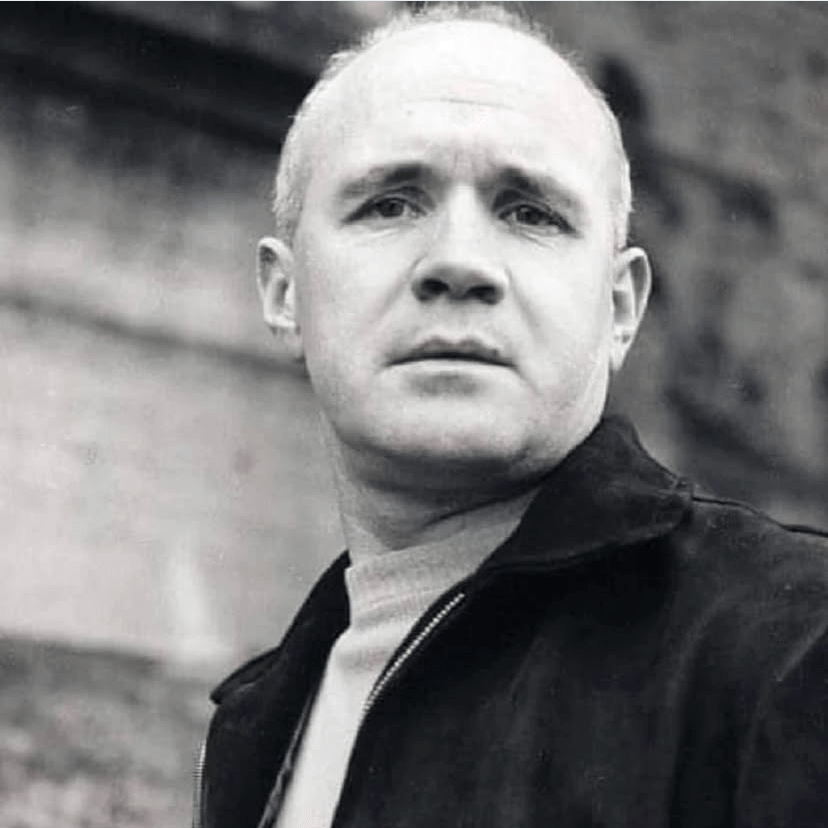
French writer and activist Jean Genet was BOTD in 1910. Born in Paris, the illegitimate child of a sex worker, he was given up for adoption as a child. A petty thief and vagrant by his teens, he was sent to prison aged 15, where he spent three years. He joined the Foreign Legion at 18 but was dishonourably discharged after being caught having sex with a fellow soldier, and returned to a life of petty crime, prostitution and vagrancy. During one of many prison sentences, he wrote his semi-autobiographical novel Notre-Dame-des-Fleurs (Our Lady of the Flowers). Published in 1943, largely due to the efforts of Jean Cocteau, it caused a sensation with its sexually explicit accounts of bad behaviour, making him the darling of the Paris literati. Threatened with life imprisonment, Cocteau and other celebrity fans including Jean-Paul Sartre petitioned the President for his acquittal. His other works include Miracle de la rose (The Miracle of the Rose), Journal du voleur (The Thief’s Journal) and Querelle de Brest, continuing his themes of violence, transgressive sexuality and criminal queer identity. He also found success with his 1947 play Les Bonnes (The Maids), loosely based on the case of housemaids Lèa and Christine Papin who savagely murdered their bourgeois employers. In 1950, he wrote and directed the film Un Chant d’Amour (A Song of Love), depicting a gay male prisoner sexually fantasising about his prison warden. Genet became politically active during the 1960s, protesting the police brutality against French Algerians, supporting the Black Panthers and advocating for Palestinian refugees. His open discussions of sexuality and subversion of bourgeois morality made him beloved of the Beat Generation and 1960s counterculture, and he was championed by writers including Jack Kerouac, Allen Ginsberg, William S. Burroughs and Alexander Trocchi. Genet had a number of younger Arab lovers throughout his life, including Lucien Senemaud, whom he supported financially even after Senemaud’s marriage. He died in 1986, aged 75. Prisoner of Love, his account of visits to Palestinian refugee camps during throughout the 1970s, was published posthumously in 1984. Now hailed as one of the 20th century’s leading cultural figures, Genet’s work has inspired writers, artists and musicians including John Rechy, Charles Bukowski, Patti Smith, Robert Mapplethorpe, Edmund White (who wrote a biography of Genet in 1993), Kathy Acker, Dennis Cooper and David Bowie (whose song Jean Genie was written in tribute to him). Genet was also a major influence on filmmakers, notably Rainer Werner Fassbinder, who filmed Querelle in 1981 starring Brad Davis and Jeanne Moreau; John Waters, christened his protégé Divine after the lead character in Our Lady of the Flowers; and Todd Haynes, whose 1991 debut feature film Poison was based on Genet’s prison writings. Genet’s plays continue to be performed worldwide, notably The Maids, which was adapted into a 1975 filmhaynes by Christopher Miles.
Jean Genet

 Super Gays Born on this Day