
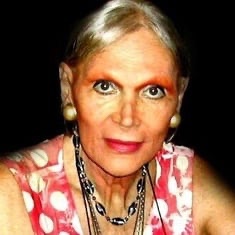
Italian actress and writer Giò Stajano was BOTD in 1932. Born in Puglia to a working-class family, she was assigned male at birth. She studied art in Florence and Rome, and began exhibiting paintings with some success. In 1959, she published the autobiographical Roma capovolta, detailing the cafe society and gay underworld of Rome. Banned for offending public morality, the book brought her national attention. These were followed by Meglio l’uovo oggi (A better egg today), a roman-a-clef about gay life in Rome, detailing the sex life of King Umberto II, and Roma Erotica, both of which were banned. Her books and penchant for dancing in fountains inspired the creation of Anita Ekberg’s famous scene in Federico Fellini’s 1960 film La dolce vita. Stajano was cast in a small role in the film, but her scenes were cut after arguing with Fellini. (Subsequent releases of the film have restored her scenes). In 1960, she was arrested and put on trial as part of a police crackdown on homosexuality, coined the Balletti verdi. In protest, she appeared in court in female mourning drag. She wrote and edited gossip magazines through the 1960s, including a popular agony aunt column Il salotto di Oscar Wilde, and appeared in Italian New Wave films Gli scontenti, Caccia all’uomo and Nick the Sting. In 1983, she transitioned to female and became Maria Gioacchina Stajano Starace, the Contessa Briganti di Panico, but continued to use ‘Giò’ in her public life. Her 1992 memoir La mia vita scandalosa became a national bestseller. In her later years, Giò returned to Puglia and joined the convent of Betania del Sacro Cuore near Vische as a lay sister. She died in 2011, aged 78.
Giò Stajano

 Super Gays Born on this Day