
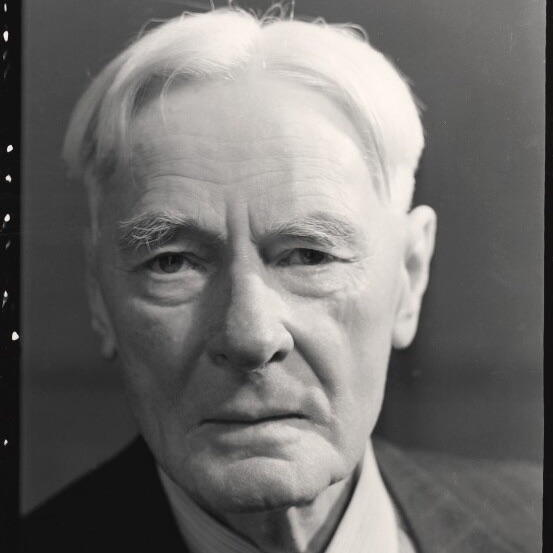
British-Austrian writer Norman Douglas was BOTD in 1868. Born in Thüringen, Austria to upper-middle-class family of Scottish and German descent, he was raised at his family’s estate in Deeside in Scotland, and educated in England and Germany. He joined the British Foreign Office in 1893, working in a diplomatic post in St Petersburg, though was placed on leave after an alleged affair. After travelling widely through India, Italy and North Africa, he settled in Naples, where he married his first cousin Elizabeth FitzGibbon. They had two children together before divorcing in 1903, supposedly due to FitzGibbon’s infidelity. He then settled in the island of Capri, befriending a group of European homosexual expatriates including the photographer Wilhelm von Gloeden and writer Jacques d’Adelswärd-Fersen. He published his first novel Siren Land in 1911, publishing travelogues of his Italian travels in The English Review and the Anglo-Italian Review. In 1916, while working in London, he was charged the sexual assault of a 16 year-old boy, though was released on bail. The following year, he was charged with the assaults of two further boys, and fled London for Capri. His 1917 novel South Wind, a satire of expatriate society in Capri, became a bestseller, though infuriated Fersen and their friends with his portrait of their lives of sexual debauchery. In 1921, he moved to Florence, where he formed a relationship with publisher Pino Orioli, who oversaw the publication of Douglas’ later writings. Douglas later introduced his friend D. H. Lawrence to Orioli, who arranged the first publication of Lawrence’s novel Lady Chatterley’s Lover, as well as previously unpublished writings by Richard Aldington and W. Somerset Maugham. (He later fell out with Lawrence, after objecting to Lawrence’s depiction of him in the novel Aaron’s Rod). He and Orioli travelled extensively, pursuing hundreds of sexual encounters with adolescent boys, carefully detailed in his journals. Douglas formed long-term relationships with many of the boys, meeting their families and offering to pay for their education, presumably in exchange for sex. In 1937, he was again arrested for the sexual assault of a minor, and he and Orioli fled Italy for the south of France. Following the Nazi occupation of France and Orioli’s death in 1942, he returned to London. After the war, he returned to Capri, where he was made an honorary citizen of the island, entertaining celebrities including Graham Greene and food writer Elizabeth David. After several years of chronic illness, he committed suicide in 1952, aged 83. He was thought to be the model for the hedonistic Uncle Eustace in Aldous Huxley’s 1944 novel Time Must Have a Stop and the ruthless pedophile Humbert Humbert in Vladimir Nabokov’s Lolita. More recently, he features as a sexual predator in Francis King’s 1992 historical novel The Ant Colony and Alex Preston’s In Love and War, published in 2014.
Norman Douglas

 Super Gays Born on this Day