
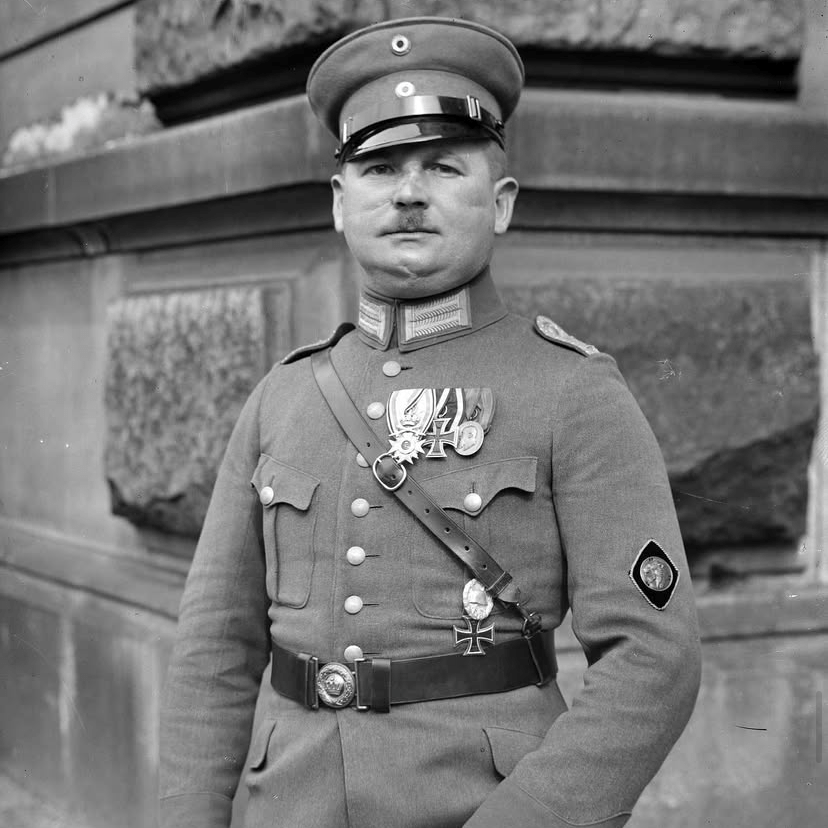
German military leader Ernst Röhm was BOTD in 1887. Born in Munich, he joined the German Imperial Army in his teens, and served during World War One, wounded three times and promoted to the rank of captain. After the war, he helped form the National Socialist German Workers’ Party. After the war, he befriended the then-unknown Adolf Hitler, helping him win the support of the Bavarian Army. He developed a private militia known as the Sturmabteilung (Brownshirts), whose membership eventually exceeded the standing Army. In 1923, he and Hitler led a failed coup known as the Beer Hall Putsch, leading to his brief imprisonment. After five years living in Bolivia, he returned to Germany in 1930 and resumed leadership of the SA, undertaking a campaign of violence and intimidation that facilitated Hitler’s rise to power. When Hitler became chancellor in 1933, he included Röhm in his cabinet, but refused to give the SA equal standing with the Nazi Party. Well-known within the party as homosexual, Röhm worshipped an Aryan ideal of blond masculinity. His known relationships included the English aristocrat and painter Francis Cyril Rose. Concerned about Röhm’s growing power and the “taint” of sexual perversion within the Party, Hitler ordered a purge of the SA in 1934 (Nacht der langen Messer, or Night of the Long Knives), in which Röhm and hundreds of SA officers were arrested for leading a rebellion against the Party. Röhm was executed without trial the next day, after refusing the option of suicide. He was 46. After his death, the Nazis expunged Röhm’s details from Party records, ordering the destruction of all known copies of Leni Riefenstahl’s propaganda film Der Sieg des Glaubens (The Victory of Faith), in which Röhm and Hitler appeared together. In recent years, Röhm’s life has been a central part of academic discussions about the links between male homosexuality, anti-Semitism and fascism.
Ernst Röhm

 Super Gays Born on this Day