
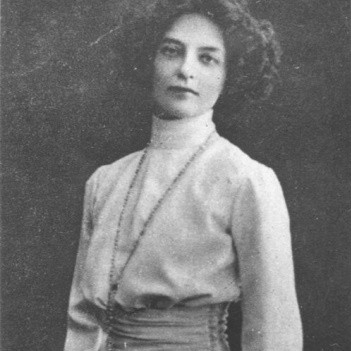
Russian poet and playwright Zinaida Gippius was BOTD in 1869. Born in Belyov, Tula to a middle-class family, she had a nomadic childhood, moving frequently for her father’s job, and was educated largely by governesses. After her father’s death, they family moved south to Yalta and later to Tiflis in modern-day Georgia. She began writing in early childhood, and was a published poet by her teens. In 1889, she married the poet and novelist Dmitry Merezhkovsky, settling in St Petersburg where she befriended the stars of fashionable literary society. She became one of the leading writers in the Symbolist movement, publishing poetry, short stories and novels in the literary magazine Severny Vestnik (The Northern Messenger). Much of her work explored sexual themes, earning the condemnation of conservative critics. Gippius gleefully courted controversy, dressing in men’s clothes, using male pseudonyms and shocking polite society with accounts of her affairs with men and women. After the 1905 Revolution, she and Merezhkovsky became revolutionaries and prominent critics of Tzar Nicholas II. Gippius’ ill health prompted frequent visits to health spas around Europe. Disillusioned with the lack of social , they relocated to Paris in 1911, returning to Russia at the outbreak of World War One. Disillusioned by the new Bolshevik government, they were subsequently denounced as anti-revolutionaries, and fled to Poland to work with dissident groups. Returned to Paris in 1919, she and Merezhkovsky became the centre of an expatriate Russian literary community, and continued to write and publish critiques of the Bolsheviks. They remained in Paris during World War Two, losing many of their friends due to Merezhkovsky’s support for Germany. She died after suffering a stroke in 1945, aged 75.
Zinaida Gippius

 Super Gays Born on this Day