
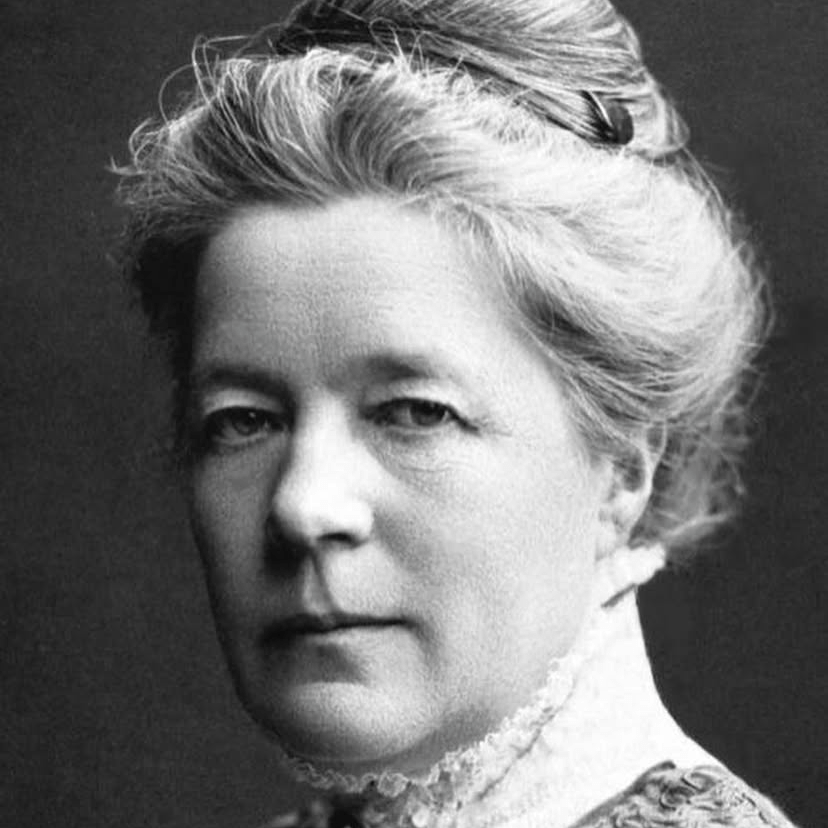
Swedish writer Selma Lagerlöf was BOTD in 1858. Born in Mårbacka to a military family, she was often ill as a child, developing a deep love of reading. Despite her father’s objections, she pursued higher education, becoming a school teacher and joining the women’s suffrage movement. She won a literary competition, leading to the publication of her debut novel Gösta Berlings saga (The Story of Gösta Berlings) in 1891. Reacting against the realism of contemporary Swedish literature, her writing incorporated folklore and the supernatural with a Romantic portrait of upper-class rural life. A national bestseller, it was later adapted into a 1924 silent film, making a star of the young Greta Garbo. The success of her second novel Jerusalem allowed her to give up teaching and write full-time. Her travels in Italy and Palestine inspired her 1897 novel Antikrists mirakler (The Miracles of the Antichrist). Her 1907 book Nils Holgerssons underbara resa genom Sverige (The Wonderful Adventures of Nils), written on commission as a geography textbook for children, combined fairytales with geographical facts, and was translated into 30 languages. In 1909, she became the first woman to be awarded the Nobel Prize for Literature, and was admitted to the Swedish Academy in 1914. At the outbreak of World War Two, she sent her Nobel Prize and Academy medals to the Finnish government to help raise money to fight the Soviet Union. Discreetly lesbian, she had a long-term relationship with Sophie Elkan, and may also have had an affair with her secretary Valborg Olander. She died in 1940, aged 81. In 1991, she became the first woman to feature on a Swedish banknote.
Selma Lagerlöf

 Super Gays Born on this Day