
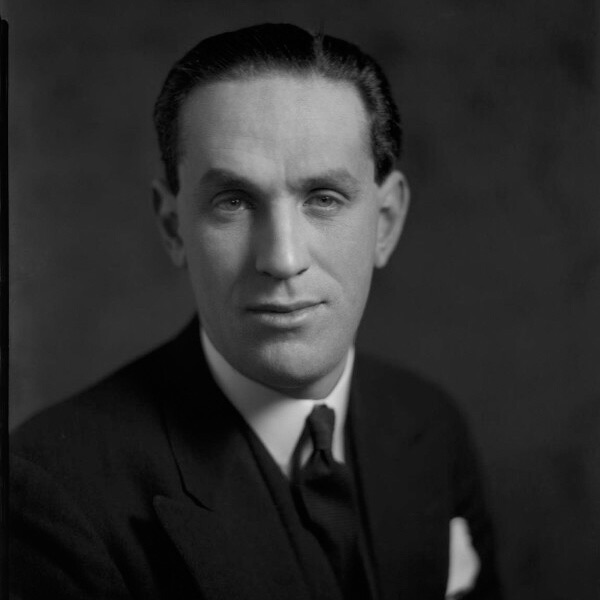
English politician Alan Lennox-Boyd, latterly 1st Viscount Boyd, was BOTD in 1904. Born in Bournemouth, Sussex, to an upper-middle-class family, he was educated at private schools and studied at Oxford University. During World War Two, he volunteered as a lieutenant in the Royal Navy, seeing active service with the navy’s Coastal Forces. After the war, he joined the Conservative Party, and was elected to Parliament in 1931, later qualifying as a barrister. In 1952, he joined the Cabinet of Prime Minister Winston Churchill as Minister for Transport and Civil Aviation, overseeing the roll-out of electric-powered railway services across England. In 1954, he was appointed Secretary of State for the Colonies, supervising the withdrawal of British control in Cyprus, Ghana, Malaya and the Sudan. In 1955, he opposed his party’s attempts to impose controls on immigrants from former British colonies in Africa and the West Indies, arguing that the same freedoms should be applied to white-majority “Old Commonwealth” countries like Canada and Australia. He was widely criticised for his mishandling of the Mau Mau Rebellion in Kenya, ignoring a secret report about the imprisonment, torture and mass slaughter of indigenous Kenyans. After repeatedly denying any wrongdoing by British colonial forces, he was exposed by Labour MP Barbara Castle, who made her own visit to Kenya, later reporting her findings to Parliament and condemning Boyd-Lennox’s failure to address human rights abuses. After the 1959 general election, returning the Conservatives to power, he was replaced as Colonial Secretary and elevated to the peerage, joining the House of Lords as 1st Viscount Boyd of Merton and appointed a Privy Counsellor. In later life, he reversed his pro-immigration views, opposing Prime Minister Harold Macmillan’s “Winds of Change” speech and joining the right-wing Conservative Monday Club. Lennox-Boyd married Lady Patricia Guinness in 1938, with whom he had three children. While Colonial Secretary, he formed a close friendship with Prince Abd al-Ilāh of Iraq, writing each other erotically-charged letters that may or may not have been evidence of an affair. After Abd al-Ilāh’s overthrow and execution in 1958, their correspondence was released to the international media by Iraqi revolutionaries, as evidence of the Prince’s moral corruption, which appeared to make little impact in Britain. He is also thought to have an affair with American art critic and socialite Stuart Preston, as reported by their mutual friend James Lees-Milne. Boyd-Lennox died in 1983, aged 78. In 2011, censored government papers about the Mau Mau Rebellion were published, confirming Boyd-Lennox’s knowledge of and failure to prevent the murder and torture of Kenyan prisoners.
Alan Lennox-Boyd

 Super Gays Born on this Day