
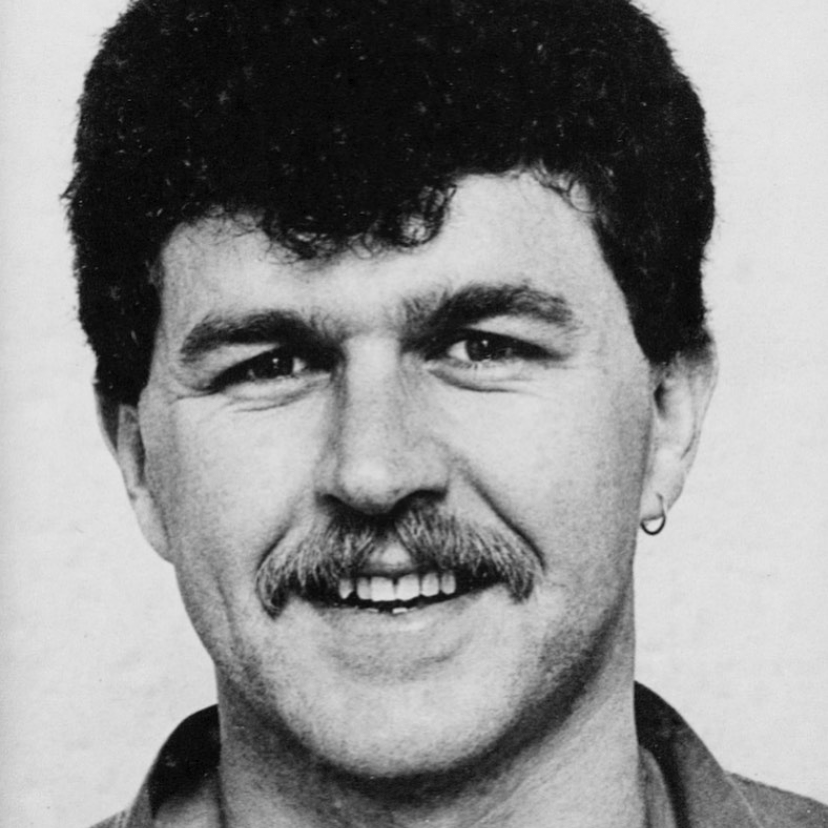
New Zealand activist and educator Bruce Burnett was BOTD in 1954. Born in Auckland, he studied architecture at the University of Auckland, dropping out to travel through Europe and study cookery, returning to New Zealand to open and run several cafes. In 1982, he moved to the United States, living in Berkeley and later in San Francisco, where he was diagnosed with the newly-identified AIDS-Related Complex. He returned to New Zealand in 1983, where homosexuality was still a criminal offence, making it difficult for people to access accurate information about HIV/AIDS. Undaunted, Burnett established the AIDS Support Network with Bill Logan and Phil Parkinson, setting up a telephone information hotline and running counselling services for people living with HIV/AIDS. In 1985, he toured the country giving a series of public talks, discussing his illness and encouraging safe sex practices. He secured government funding to set up the New Zealand AIDS Foundation, a national HIV/AIDS prevention and health organisation. Burnett died in 1985, aged 31. The NZAF’s first HIV testing clinic, opened in 1986, was named for him. His work was widely credited with overcoming public stigma about HIV/AIDS, while the NZAF’s medically-led approach to HIV/AIDS education led to substantially lower HIV transmission statistics than in other OECD countries. In 2022, the NZAF was rebranded as the Burnett Foundation Aotearoa in his honour, with Prime Minister Jacinda Ardern announcing a national action plan to eradicate HIV transmission in New Zealand by 2032.
Bruce Burnett

 Super Gays Born on this Day