
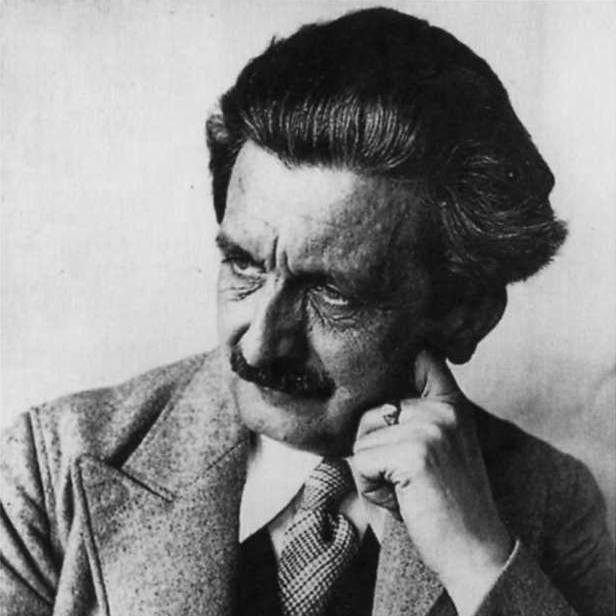
German writer, editor and activist Adolf Brand was BOTD in 1874. Born in Berlin, then part of the German Empire, to a working-class family, he grew up in Wilhelmshagen, and later trained as a schoolteacher. In 1886, he left teaching to establish a publishing firm, producing Der Eigene (The Unique), thought to be the world’s first publication devoted to “male culture”. A vocal critic of the medicalisation of homosexual identity, he wrote sustained criticisms of sexologists Richard von Krafft-Ebing and Magnus Hirschfeld, masculinist model of homosexuality drawn from Ancient Greece. German writer, editor and activist Adolf Brand was BOTD in 1874. Born in Berlin, then part of the German Empire, to a working-class family, he grew up in Wilhelmshagen, and later trained as a schoolteacher. In 1886, he left teaching to establish a publishing firm, producing Der Eigene (The Unique), thought to be the world’s first publication devoted to “male culture”. A vocal critic of the medicalisation of homosexual identity, he wrote sustained criticisms of sexologists Richard von Krafft-Ebing and Magnus Hirschfeld, masculinist model of homosexuality drawn from Ancient Greece. Via his magazine, he published photographs by Wilhelm van Gloeden, and Elisar von Kupffer In 1906, he and fellow dissident Benedict Friedlaender co-founded the advocacy group Gemeinschaft der Eigenen (Community of one’s own), allowing him to continue circulating Der Eigene. The following year, Brand published a pamphlet accusing Prince Bernhard von Bülow and Privy Councillor Max Scheefer of being lovers. Bülow successfully sued Brand for libel, and he was imprisoned for 18 months. During World War One, he was conscripted into the German Army, serving on the front lines of battle. At some point during the war, he married a nurse, Elise Behrendt, who appears to have accepted his bisexuality, allowing Brand’s lover Max Miede to live with them. After the war, he returned to Berlin, continuing to publish Der Eigene, though was rapidly surpassed in popularity and political influence by Hirschfeld. After the rise of the Nazi Party in 1933, Brand’s offices were raided and his personal papers destroyed. Financially destitute, he sold his apartment to Miede and lived in a single room with Behrendt, falling into poverty and obscurity. He and Behrendt were killed in 1945 during the US-led Allied force’s bombing of Berlin. He was 70.
Adolf Brand

 Super Gays Born on this Day