
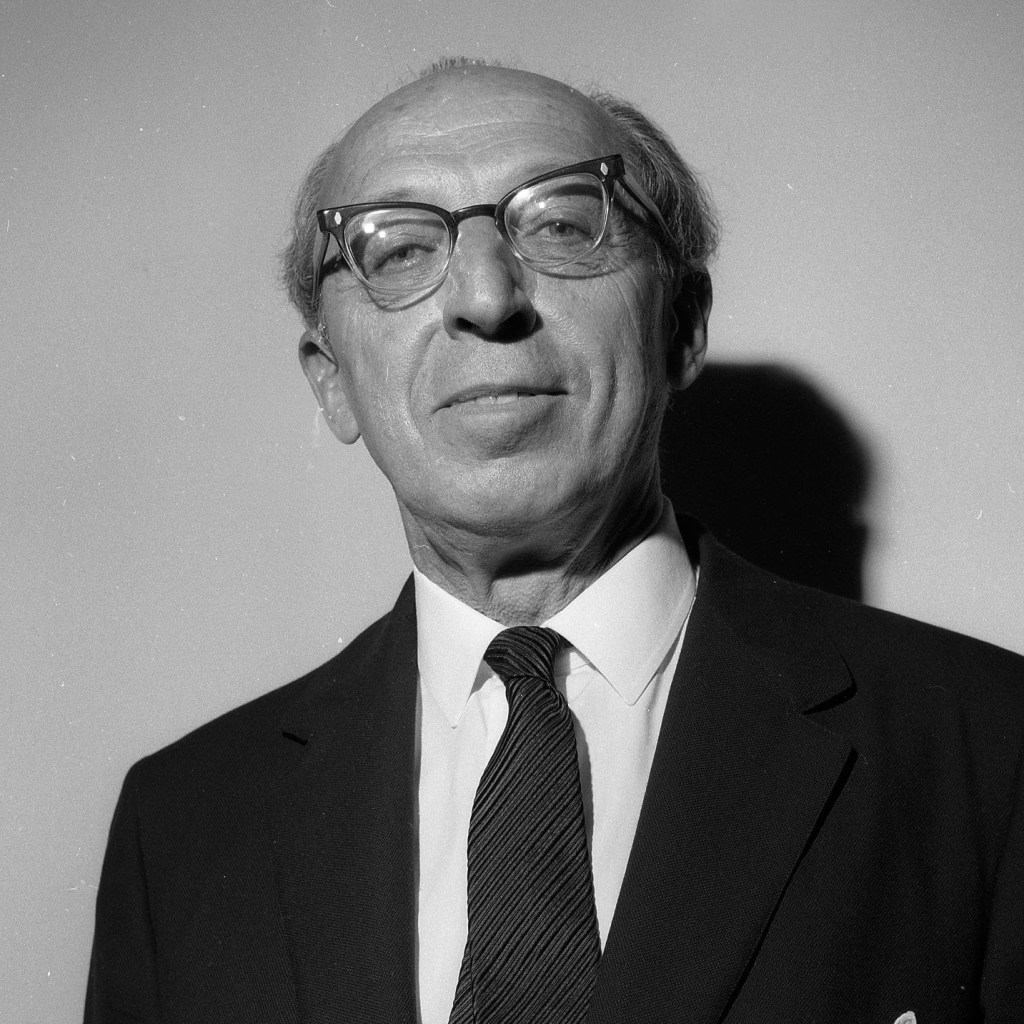
American composer Aaron Copland was BOTD in 1900. Born in Brooklyn, New York City to Russian-Jewish immigrant parents, he began studying and composing music in early childhood, writing his first piano sonata in his teens. He moved to France in 1921 to study with star pianist and teacher Nadia Boulanger, settling in Paris where he befriended literary celebrities André Gide, Marcel Proust, Gertrude Stein, Ernest Hemingway, Paul Bowles and Jean-Paul Sartre. He returned to the United States in 1924, having his first major success with Symphony for Organ and Orchestra, composed for Boulanger’s American concert appearances. Following Alfred Stieglitz’s maxim that American artists should reflect the ideals of democracy, he abandoned avant-garde composition for work with broader popular appeal. He is best known for his orchestral pieces Appalachian Spring, Billy the Kid and Rodeo, evoking the vast landscapes and robustly masculine spirit of the American West, the stirringly patriotic Fanfare for the Common Man, and musical adaptations of the speeches of President Abraham Lincoln and the poetry of Emily Dickinson. Lured to Hollywood in the late 1930s, he composed a series of well-received scores for the films Of Mice and Men, Our Town and A Place in the Sun, and won an Oscar for his score for the 1949 drama The Heiress. In later years, he returned to avant-garde compositions, inspired by the 12-tone school of compose Arnold Schoenberg, which were poorly received. Discreetly gay, Copland had affairs with artist Alvin Ross, dancer Erik Johns, painter Prentiss Taylor, music critic Paul Moor and composer Leonard Bernstein and a longer relationship with photographer Victor Kraft. He died in 1990, aged 90. Named “the Dean of American Composers”, he is now acknowledged as a major influence on 20th century American music.
Aaron Copland

 Super Gays Born on this Day