
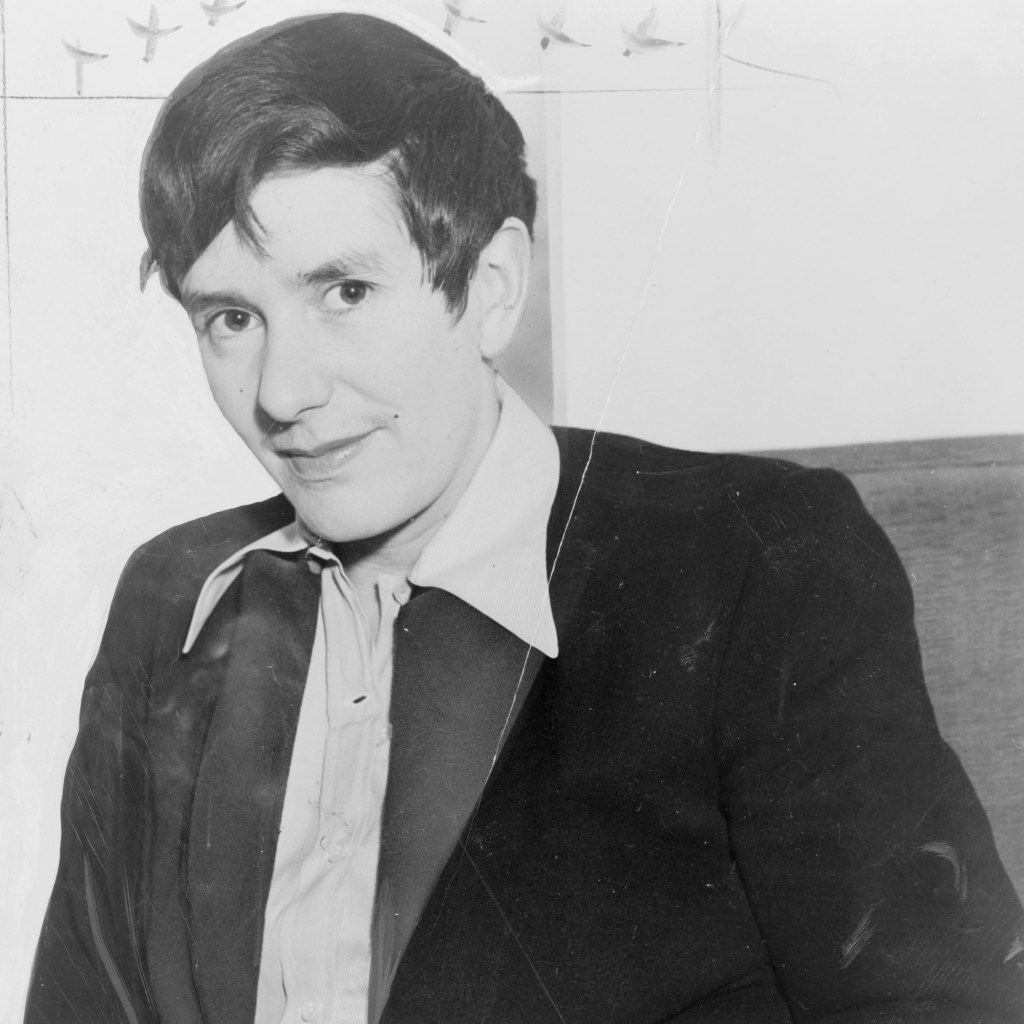
German actress and writer Erika Mann was BOTD in 1905. Born in Munich, the eldest child of novelist Thomas Mann, she developed close relationships with her five younger siblings, especially her brothers Klaus and Golo. Educated at private schools, she developed an early interest in theatre, making her first professional stage appearance while still a high school student. She moved to Berlin in 1924 to study drama, appearing to great success in Klaus’ 1925 biographical play Anja und Esther (Anja and Esther) and forming a relationship with her co-star Pamela Wedekind. In 1927, she and Klaus undertook a world tour, chronicled in their book Rundherum; Das Abenteuer einer Weltreise. Returning to Germany, she became involved in Leftist politics, working as a journalist, appearing in Leontine Sagan‘s lesbian-themed 1931 film Mädchen in Uniform (Girls in Uniform), and appearing in an anti-Fascist cabaret named Die Pfeffermühle (The Pepper Mill). The Manns’ pacifist politics quickly earned the enmity of the Nazi Party, forcing Thomas, Klaus, Golo and finally Erika to flee to Switzerland. Faced with losing her German citizenship, she entered into a marriage of convenience with poet W. H. Auden in 1935, making her a British citizen. In 1936, she joined her father and family in Zürich, briefly re-opening Die Pfeffermühle, before emigrating to the United States in 1937. Settling in New York City, she became a key figure in a left-wing expatriate community including fellow exiles Kurt Weill, Ernst Toller and Sonia Sekula. She and Klaus continued their anti-Fascist journalism, writing a critique of Nazi Germany’s educational system and publishing a book of essays about German exiles. She relocated to London during World War Two, working as a journalist for the BBC’s German-language unit and reporting from battlefields in France, Belgium and the Netherlands. After Germany’s surrender in 1945, she accompanied American forces to Aachen and Munich, attempting unsuccessfully to claim for the return of the Mann family home. She spent a year reporting on the Nuremberg Trials, before moving to California to care for her father. She continued to report on German post-war politics, criticising the slow pace of the country’s de-Nazification process, and assisted the FBI in identifying ex-Nazi refugees in the United States. During the 1950s, she and Klaus came under FBI investigation for suspected Communist sympathies, eventually leading to Klaus’ suicide. Faced with persecution by the House Committee on Un-American Activities, Erika and her family returned to Switzerland. She became her father’s literary assistant and confidante, assuming responsibility for his literary estate after his death in 1955, and publishing a “revealing” memoir about him in 1958. She died in 1969 of cancer, aged 63.
Erika Mann

 Super Gays Born on this Day