
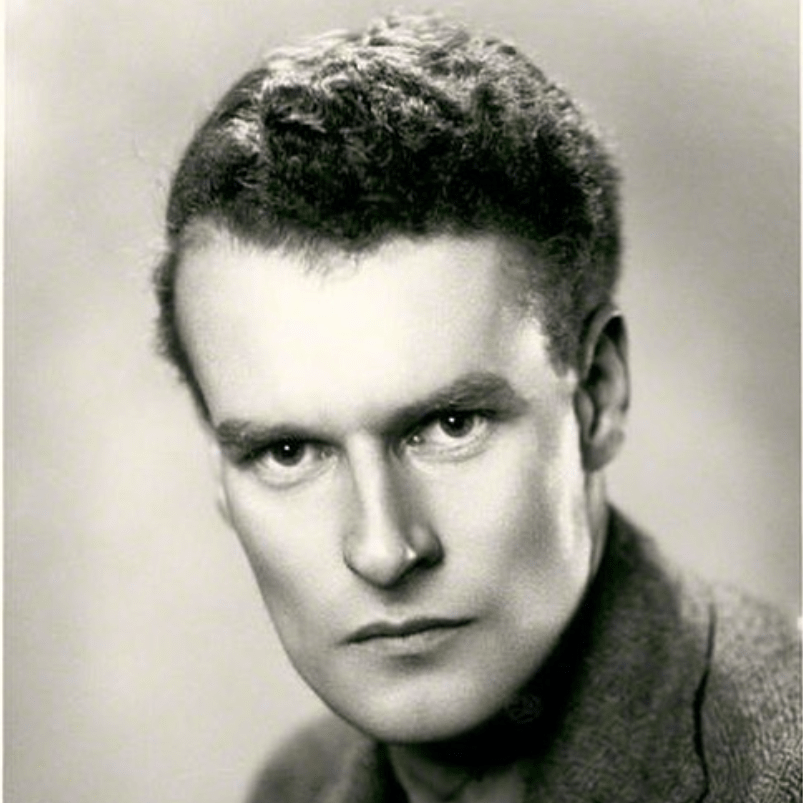
English filmmaker Anthony Asquith was BOTD in 1902. The son of British Prime Minister Herbert Asquith and aristo-socialite Margot Tennant, he had a privileged upbringing, attending Winchester College and studying at Oxford University. Described as small, effeminate and hook-nosed, he was nicknamed “Puff” (short for “puffin”) by his mother, which remained with him for life. To the disappointment of his family, he became interested in filmmaking, considered at the time a disreputable industry. A founding member of the Oxford Film Society, he travelled to Hollywood in the 1920s to study filmmaking technique, meeting Charlie Chaplin, Lillian Gish and Ernst Lubitsch. Returning to England, he co-directed his first feature film Shooting Stars when he was 25. While his early work was too artistic to appeal to mass audiences, he hit major success in 1938 directing Pygmalion, an adaptation of George Bernard Shaw’s play, making a star of lead actress Wendy Hiller. He also had a fruitful working relationship with gay playwright Terence Rattigan, directing successful adaptations of French Without Tears, The Winslow Boy and The Browning Version, which became a star vehicle for Michael Redgrave. He had further success with his 1952 adaptation of Oscar Wilde’s comedy The Importance of Being Earnest, reuniting him with Redgrave and also starring Edith Evans as Lady Bracknell. Despite his privileged background, Asquith was a fierce supporter of workers’ rights, heading the British film technicians’ union and advocating for government subsidies for the film industry. Little is known about his personal life, though according to friends he was a repressed homosexual who sublimated his desires into his work. His cousin was the openly gay socialite Stephen Tennant. Asquith continued making films until his death in 1968, aged 65.
Anthony Asquith

 Super Gays Born on this Day