
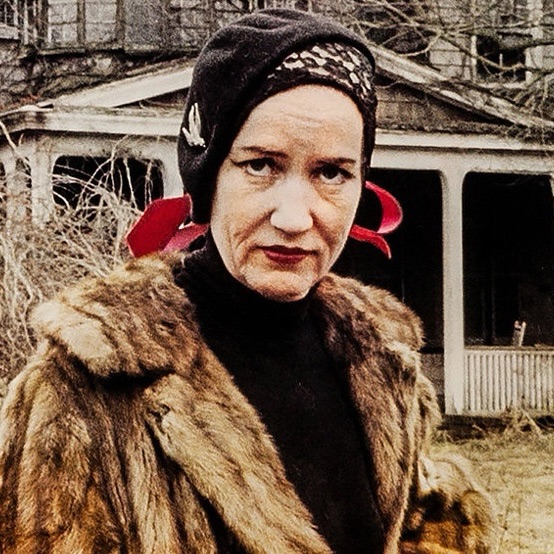
American socialite, performer and cult figure Edith Bouvier Beale, also known as Little Edie Beale, was BOTD in 1917. Born in New York City, her mother was the heiress and socialite Edith Ewing Beale, making “Little Edie” first cousin to future First Lady Jacqueline Bouvier. Little Edie grew up in luxury, eventually settling at the family’s lavish mansion, Grey Gardens, in the East Hamptons. After attending a finishing school in Connecticut, she became a popular socialite and part-time model, earning the nickname “Body Beautiful Beale” and reportedly turning down marriage proposals from Howard Hughes, John Paul Getty and Joseph Kennedy Jr. Taking up residence at the Barbizon Hotel, she attempted to pursue a career as an actress, singer and/or trophy wife, with little success. In 1931, her father left Edith to live with his younger mistress, eventually divorcing in 1935. Bereft of an income, Edith’s life quickly descended into poverty and she began selling heirlooms and furniture to pay household bills. In 1952, Little Edie returned from New York to take care of Edith. They became increasingly reclusive, living without electricity after bills went unpaid and surviving on cat food. The house fell into disrepair, becoming infested with stray cats and raccoons (fed regularly by Little Edie). In 1971, after complaints from neighbours, Grey Gardens was declared unfit for human habitation, and the Beales were ordered to leave. Little Edie vowed to fight their eviction, declaring their community “a mean, nasty Republican town” and catching the attention of several newspapers. After press headlines including Jackie’s Aunt Told: Clean Up Mansion, Jacqueline Kennedy Onassis intervened, paying to have Grey Gardens renovated on the condition the Beales could continue to live there. In 1973, filmmakers David and Albert Maysles approached the Beales for an interview, as part of a planned documentary about the Kennedys. Taken with the women’s eccentricity, they spent the next two years interviewing them at Grey Gardens, chronicling the house’s return to its pre-clean-up squalor and menagerie of wild animals. The resulting documentary, Grey Gardens, was released in 1975 to critical acclaim. Much of the film’s appeal was due to Little Edie, now middle-aged, bald from alopecia, pairing fur coats with outfits fashioned from towels and curtains, performing song-and-dance routines for the camera and reminiscing about her lost opportunities for fame. After Edith’s death in 1977, Little Edie moved to New York City, where she had a short run as a cabaret singer in a Greenwich Village gay bar. She sold Grey Gardens in 1979, moving to Florida where she lived until her death in 2002, aged 84. In 2006, the Maisels released the film The Beales of Grey Gardens, composed of unused footage from the 1975 documentary, providing greater insight into Little Edie’s relationship with her father and former boyfriends. Their story inspired the Tony Award winning 2007 Broadway musical Grey Gardens, written by Doug Wright, and the 2009 TV film Grey Gardens, directed by Michael Sucsy and co-written with Patricia Rozema and starring Jessica Lange and Drew Barrymore as Big and Little Edie. Now hailed as a camp and queer icon, Little Edie’s eccentric dress sense inspired a fashion collection by Calvin Klein and is recreated by adoring drag queens worldwide.
Edith Bouvier Beale

 Super Gays Born on this Day