
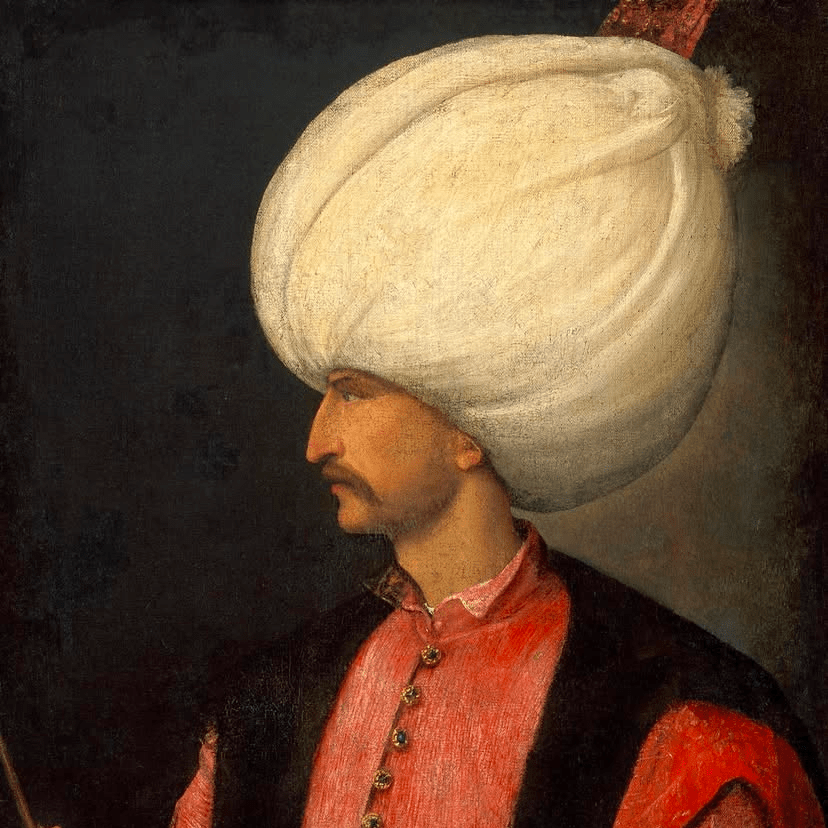
Turkish monarch and military commander Suleiman I, also known as Suleiman the Magnificent, was BOTD in 1494. Born in Trabzon (now in modern-day Turkey), he was the son of Selim I, the Sultan of the Ottoman Empire. As a boy, he was gifted a Greek slave, Argali Ibrahim, who became his lover and later his most trusted advisor. Appointed as a regional governor when he was 17, he succeeded his father as Sultan in 1520. He oversaw the expansion of the Ottoman Empire into central Europe and the Mediterranean, personally drafting major changes to society, education, taxation and criminal law, successfully integrating civic and Islamic Shari’ah law. A distinguished poet, he oversaw the artistic, literary and architecture development of the Empire, later dubbed “the Golden Age”. Suleiman had two known consorts and 17 concubines, with whom he had ten children. His infatuation with Ibrahim was well-chronicled and frequently gossiped about, as Ibrahim was promoted from royal falconer to first officer of the Royal Bedchamber to Grand Vizier. Suleiman built Ibrahim a lavish palace outside the Hagia Sophia, frequently sleeping in each other’s residences. Ibrahim’s promotion to commander-in-chief of the Ottoman armies was misjudged, given his lack of military experience, and he made many enemies at court. Eventually falling out of royal favour, he was assassinated on Suleiman’s orders in 1536. He died on 1566, aged 71, becoming the longest-reigning Sultan in the history of the Ottoman Empire. His fame continued after his death in the Islamic world and in the West, including a mention in William Shakespeare‘s play The Merchant of Venice. His statue is included in the House Chamber of the United States Capitol, as one of 23 historical leaders notable for their contribution to modern jurisprudence.
Suleiman the Magnificent

 Super Gays Born on this Day