
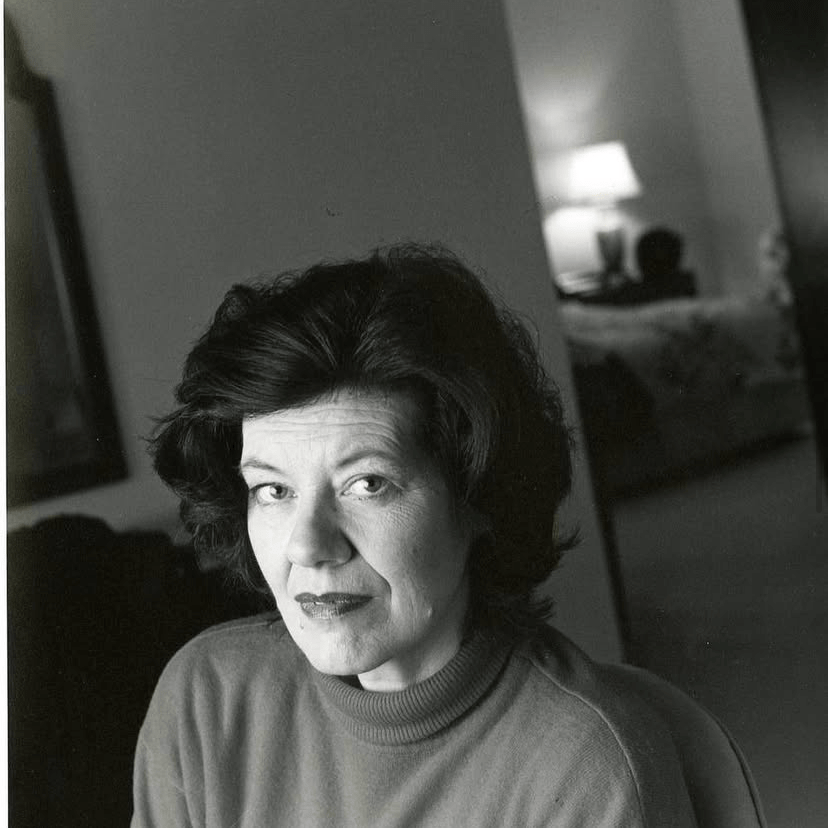
English writer and murderer Juliet Hulme, latterly known as Anne Perry, was BOTD in 1938. Born in London, she suffered from tuberculosis as a child and was sent to South Africa to improve her health. She and her family later emigrated to New Zealand, where her father was appointed rector of Canterbury University in Christchurch. She befriended fellow student Pauline Parker, an intelligent and sickly girl from a working-class family. The two formed an intense friendship, isolating themselves from other students and creating a private fantasy world, recorded carefully in their diaries. Parker’s parents, concerned about her dependence on Hulme, took her to a psychiatrist, who suspected the girls of having a lesbian relationship. After the breakdown of the Hulmes’ marriage, Juliet’s parents proposed to return her to South Africa, ostensibly to improve her health. Parker became convinced that her own mother Honorah was responsible for separating them. In 1954, Parker and Hulme battered Honorah to death in a public park, using a brick wrapped in a stocking. Initially claiming that Honorah had suffered an accident, they were arrested and charged with murder. Their trial became a national sensation, particularly when evidence of their “unnatural” attraction was used to advance an insanity defence. Found guilty of murder but too young for the death penalty, they were imprisoned indefinitely. Hulme spent five years in an adult prison in Auckland. After her release in 1959, she rejoined her father in England, changed her name to Anne Perry and became a flight attendant. After a period living in the United States, she joined the Church of Jesus Christ of Latter-Day Saints. In the 1970s, she settled in rural Scotland with her mother and began writing murder mysteries. She became a successful crime writer, publishing over 50 novels and selling 26 million books worldwide. Interest in the Parker-Hulme case was renewed in 1994, following the international success of Peter Jackson’s film Heavenly Creatures starring Melanie Lynskey as Parker and Kate Winslet as Hulme. After a tabloid press investigation, Perry’s true identity was revealed. In a 1994 interview, Perry expressed her regret over the murder, claiming that she and Parker were not lesbians, had never been lovers and had not contacted each other since the trial. Nonetheless, their story has been of interest to lesbian writers and historians. In the 1991 book Parker and Hulme: A Lesbian View, academics Julie Glamuzina and Alison Laurie argued that Parker and Hulme were lesbians and victims of a heteronormative society. Michelanne Forster’s 1992 play Daughters of Heaven similarly portrayed Parker and Hulme in a lesbian relationship. In 2017, Perry moved to Los Angeles to develop feature films based on her novels. She died in 2023, aged 84.
Anne Perry

 Super Gays Born on this Day