
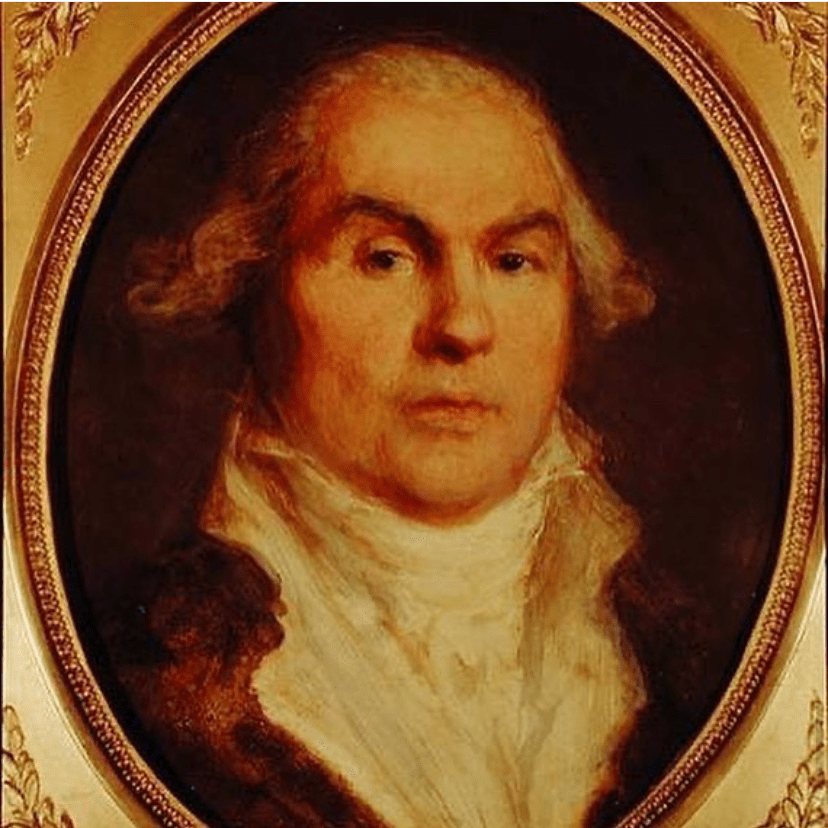
French politician and lawmaker Jean-Jacques-Régis de Cambacérès was BOTD in 1753. Born in Montpellier into an impoverished aristocratic family, he studied law at the College d’Aix and succeeded his father as a state councillor in Toulouse. A supporter of the French Revolution, he was a member of the 1972 National Convention which assembled and proclaimed the First French Republic. An expert strategist, he voted in favour of executing King Louis XVI but recommended that the death penalty be postponed until it could be ratified by a legislative body. He became a member of the Committee of General Defence and its successor the Committee of Public Safety, writing much of the key legislation of the Revolutionary era. Eventually appointed the Minister of Justice, he supported the coup that brought Napoleon Bonaparte to power. Appointed as Second Consul, he drafted a new civil legal code which became part of the 1804 Napoleonic Code. While disapproving of Napoleon crowning himself Emperor, he accepted the Duchy of Parma, and frequently assumed the role of head of state while Napoleon fought battles abroad. Exiled from France after Napoleon’s downfall, he was invited to return in 1818. He was later elected to the Académie Française and lived in Paris until his death in 1824, aged 70. Openly homosexual, he was the target of a number of jokes and satirical sketches, while his fondness for fine dining and extravagant living was also mocked. Cambacérès is popularly viewed as being responsible for the decriminalisation of homosexuality, though this has been disputed by historians. France’s liberal position on homosexuality was subsequently adopted by Belgium, the Netherlands, the Rhineland, Italy and Spain, as well as French colonies around the world.
Jean-Jacques-Régis de Cambacérès

 Super Gays Born on this Day