
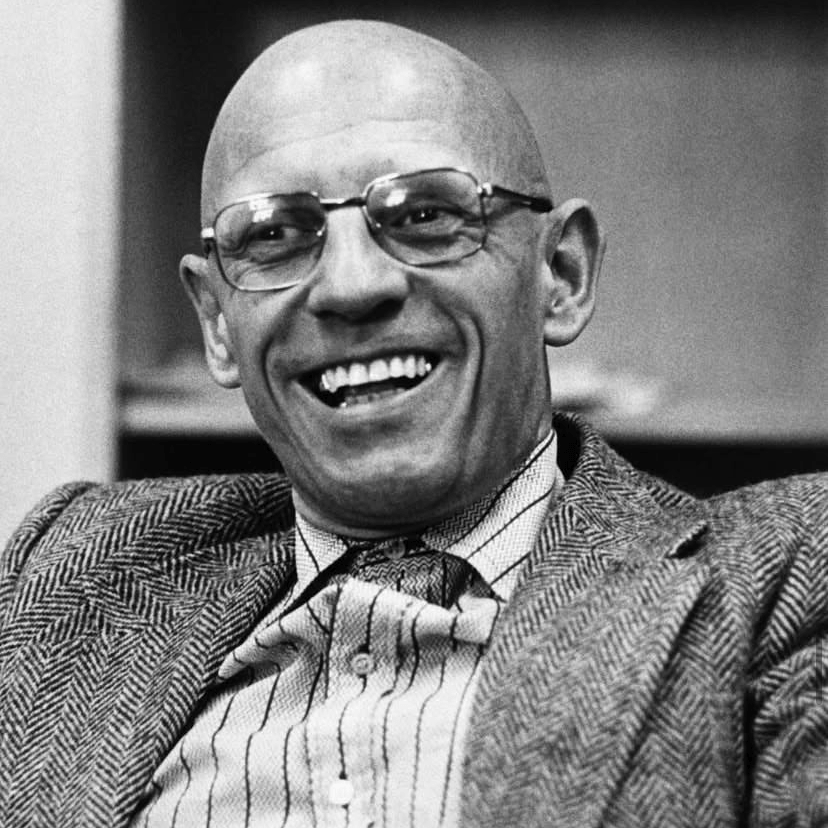
French philosopher and activist Michel Foucault was BOTD in 1926. Born in Poitiers to an upper middle-class family, he studied philosophy and psychology at the Sorbonne. After working for many years as a cultural diplomat, he returned to France in the 1960s, publishing Folie et déraison (Madness and Civilisation) and Naissance de la clinique (Birth of the Clinic), critiques of institutional medicine and contemporary definitions of insanity. In his 1969 book L’archéologie du savoir (The Archaeology of Knowledge), he rejected objective notions of truth, arguing that systems of knowledge (discours) were situational and typically used as means of social control. He developed his theories of discourse in Surveiller et punir (Discipline and Punish), an analysis of penal systems and the use of technology to control the human body. In 1976, he published La Volonté de savoir (The Will to Knowledge), the first of a multi-volume history of sexuality, analysing 19th century constructions of sexuality and the emergence of homosexuality as a distinct identity. An often controversial figure, he embraced Leftist and radical politics, supporting his students during the 1968 protests, and was involved in anti-racist and penal reform campaigns. His support for the 1978 Iranian Revolution was widely criticised in the French press, as were his claims that children could give sexual consent. In 1981, he undertook a popular lecture tour in the United States, and became a fixture of San Francisco’s burgeoning BDSM scene, describing sado-masochism as “the creation of new possibilities of pleasure”. After dismissing the HIV/AIDS crisis as “a dreamed-up disease”, he was diagnosed with HIV in 1983. He died in 1984, aged 57, survived by his partner of 20 years Daniel Defert. Now considered one of the most important philosophers of the 20th century, his theories have influenced the fields of psychology, sociology, literary theory, feminism and queer studies.
Michel Foucault

 Super Gays Born on this Day