
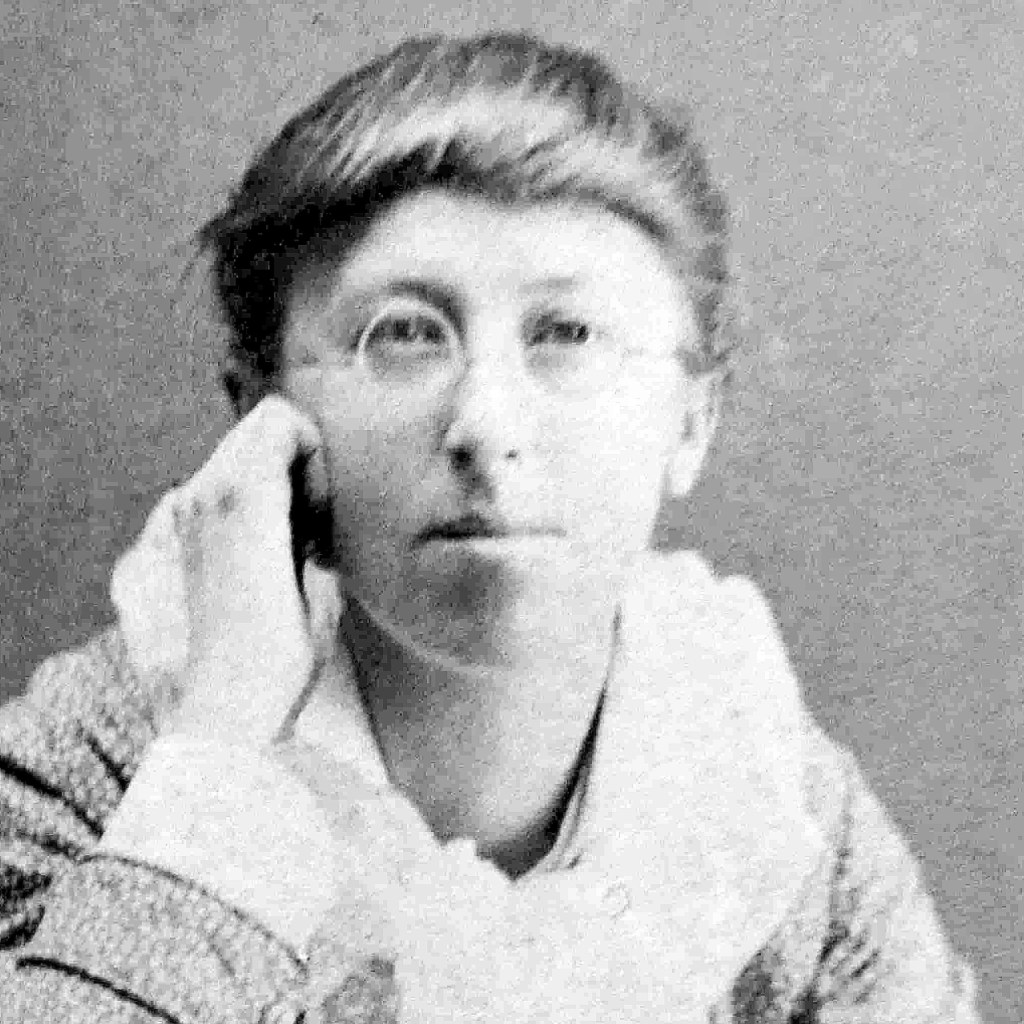
English writer Violet Paget, better known by her pseudonym Vernon Lee, was BOTD in 1856. Born in Boulogne-sur Mer, France to English expatriate parents, she was raised in Florence, Italy, where she developed a life-long interest in Renaissance art. In 1880, she published her first essay collection, Studies of the Eighteenth Century, adopting a male pseudonym to be taken more seriously by publishers and critics. The book became a surprise bestseller, introducing English-speaking audiences to the work of Italian writers Pietro Metastasio, Carlo Goldini and Carlo Gozzi. She met and befriended many of the leading writers of her age, including Walter Pater, Oscar Wilde, Henry James and Aubrey Beardsley, and the artist John Singer Sargent who painted her portrait. Her subsequent essay collections Belcaro and Euphorion covered an eclectic range of topics, including the Italian Renaissance, aesthetic theory and critical studies of William Shakespeare, while her novel Miss Brown was a brutal satire of the English Pre-Raphaelite artists. In later life, she wrote plays, travelogues and ghost stories and fairytales. During World War One, she became a pacifist, joining the anti-militarist organisation the Union of Democratic Control and writing the pacifist drama Satan the Waster. Openly lesbian, she dressed in men’s clothes, and is thought to have had relationships with the writers Mary Robinson, Clementina Anstruther-Thomson and Amy Levy and composer Mary Augusta Wakefield. She died in 1935, aged 78. Largely forgotten by her death, her work was rediscovered by feminist scholars in the 1970s.
Vernon Lee

 Super Gays Born on this Day