
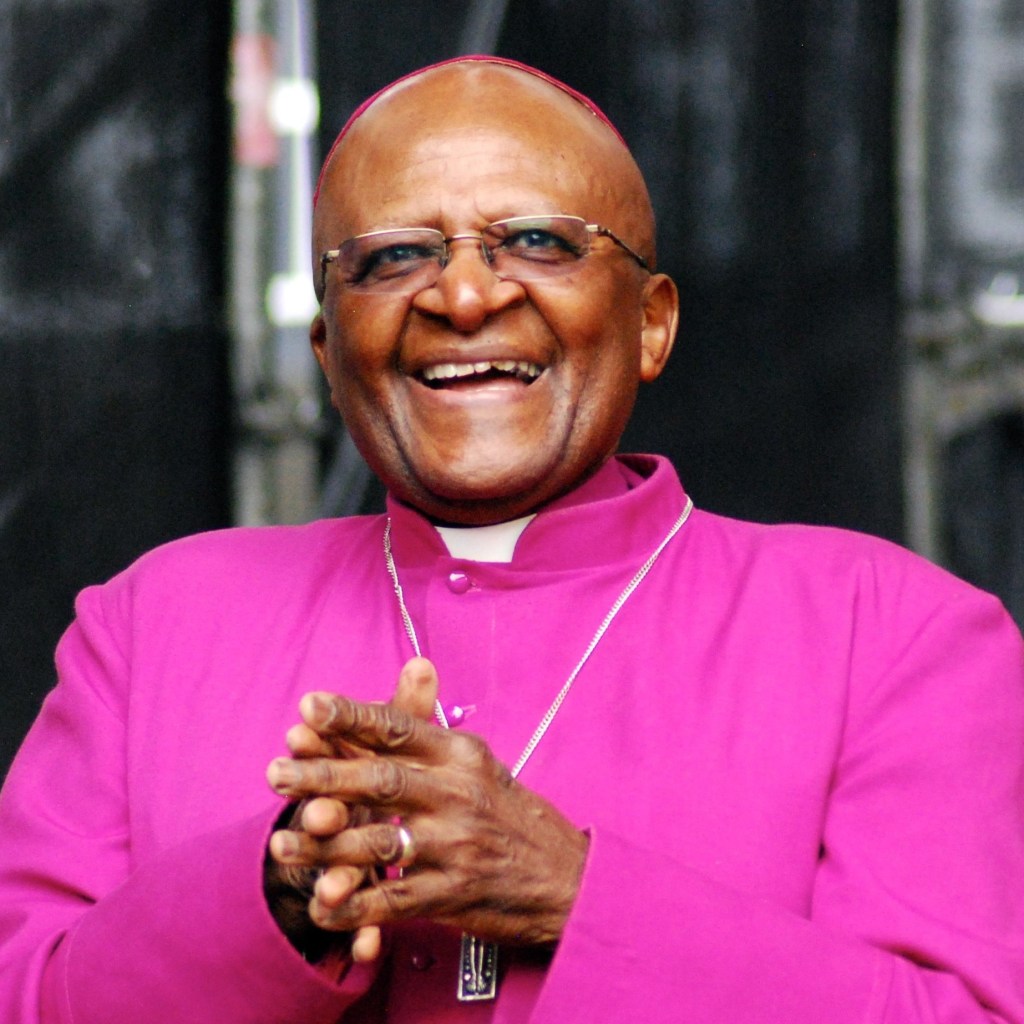
South African cleric and activist Desmond Tutu was BOTD in 1931. Born in Klerksdorp in the Transvaal Republic, he was raised in poverty, suffering from polio and tuberculosis as a child. An excellent student, he won a place to medical school, but his family were unable to afford the tuition. He won a scholarship to study teaching at the University of Pretoria, later becoming a high school teacher. In 1955, he married fellow teacher Nomalizo Leah Shenxane with whom he had four children. Both left the teaching profession in protest at the white South African government’s policy to racially segregate schools. Tutu became an Anglican priest, receiving his first curacy in 1960, and spending several years studying and teaching in London, Israel and Lesotho. Returning with his family to South Africa in 1966, he became a prominent critic of apartheid, leading non-violent protests and civil disobedience campaigns. In 1978, he became General-Secretary of the South African Council of Churches, significantly boosting his national profile. After announcing his support for international trade sanctions against South Africa, the government confiscated his passport, prompting international criticism. In 1981, he was permitted to travel overseas on a speaking tour. A charismatic and impassioned public speaker, he was instrumental in drawing European and American support for the anti-apartheid movement. In 1984, he was awarded the Nobel Peace Prize, attending the award ceremony in Oslo which was delayed by a bomb scare. In 1986 he became the Archbishop of Cape Town, leading mass anti-apartheid protests and opposing the death penalty. After the fall of apartheid in 1990, he chaired the Truth and Reconciliation Commission, insisting on a “restorative justice” model in which witnesses who confessed to human rights abuses were granted immunity from prosecution and made restitution to their victims. Tutu also supported efforts to combat HIV/AIDS and campaigned for gay rights, declaring himself “ashamed to be an Anglican” when the 1998 Lambeth Conference upheld its opposition to “practising homosexuals” within the church. In 2015, he gave a blessing at his daughter Mpho’s same-sex wedding in the Netherlands. He died in 2021, aged 90. One of the most revered activists of the anti-apartheid movement, he earns Honorary SuperGay Status for his inclusive and constructive approach to civil rights and his fearless support of queer South African communities.
Desmond Tutu

 Super Gays Born on this Day