
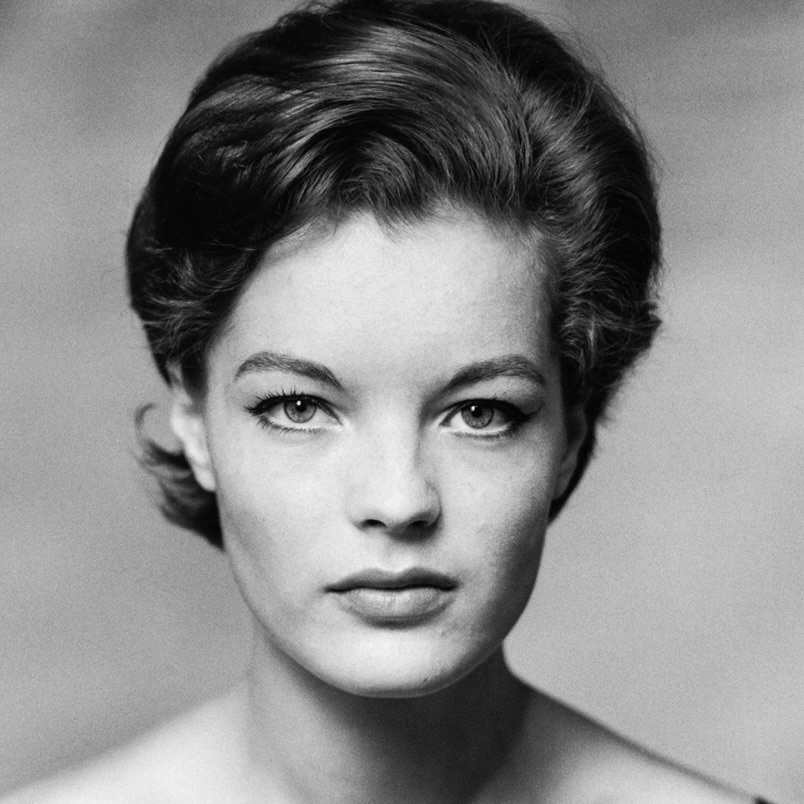
Austrian actress was BOTD in 1938. Born Rosemarie Magdalena Albach in Vienna to a prominent acting family, she was educated at private schools in Germany and Austria, showing an early interest in acting. Coached by her mother, she made her screen debut at 15, becoming a star in the 1955 film Sissi, a saccharine biopic of the early life of Empress Elizabeth of Austria. Two successful sequels followed, though Schneider later complained that the role “sticks to me just like oatmeal”. Determined to avoid typecasting, she starred in a 1957 remake of the lesbian cult classic Mädchen in Uniform. She returned to costume drama with Christine, recreating a role once played onscreen by her mother, and had a high-profile relationship with her co-star Alain Delon. She became one of the most sought-after actresses of 1960s cinema, appearing in Orson Welles’ film of Franz Kafka’s novella The Trial, Luchino Visconti’s Boccaccio ’70 and the Hollywood studio comedies Good Neighbour Sam and What’s New Pussycat? Relocating to France, she appeared with Delon in Jacques Deray’s sexy psychodrama La Piscine, and Les choses de la vie (The Things of Life), the first of five films with Claude Sautet. She reunited with Visconti to play a middle-aged Sissi in the biopic Ludwig, co-starring Helmut Berger, and had great success in Claude Chabrol’s Les innocents aux mains sales (Innocents with Dirty Hands), Andrzej Żuławski’s L’important c’est d’aimer (The Most Important Thing: Love) and Sautet’s Une histoire simple (A Simple History). In later life, she understandably refused to work with Rainer Werner Fassbinder after he called her “a stupid cow”, appearing instead in Bertrand Tavernier’s La mort en direct (Death Watch), and Jacques Rouffio’s La passante du Sans-Souci. Schneider’s personal life was as turbulent and melodramatic as her films. After being dumped by Delon, she attempted suicide, she was briefly married twice and had two children. She had known affairs with Louis Malle, Willy Brandt, Louis Malle, Sammy Davis Jr, Bruno Ganz and Jean-Louis Trintignant, and in later life confessed to a biographer that she had relationships with women, including a long-time crush on Simone Signoret. In 1981, her 14 year-old son David was killed in an accident. Schneider died the following year, reportedly from a heart attack, after struggling with depression and alcohol addiction. She was 43. Now recognised as one of the greatest European actresses of the 20th century, she has attracted a devoted LGBTQ fanbase, notably filmmaker Pedro Almodóvar, who referenced her in his Oscar-winning 1999 film Todo sobre mi madre (All About My Mother). The Prix Romy Schneider is awarded annually to an ingenue actress in the French film industry.
Romy Schneider

 Super Gays Born on this Day