
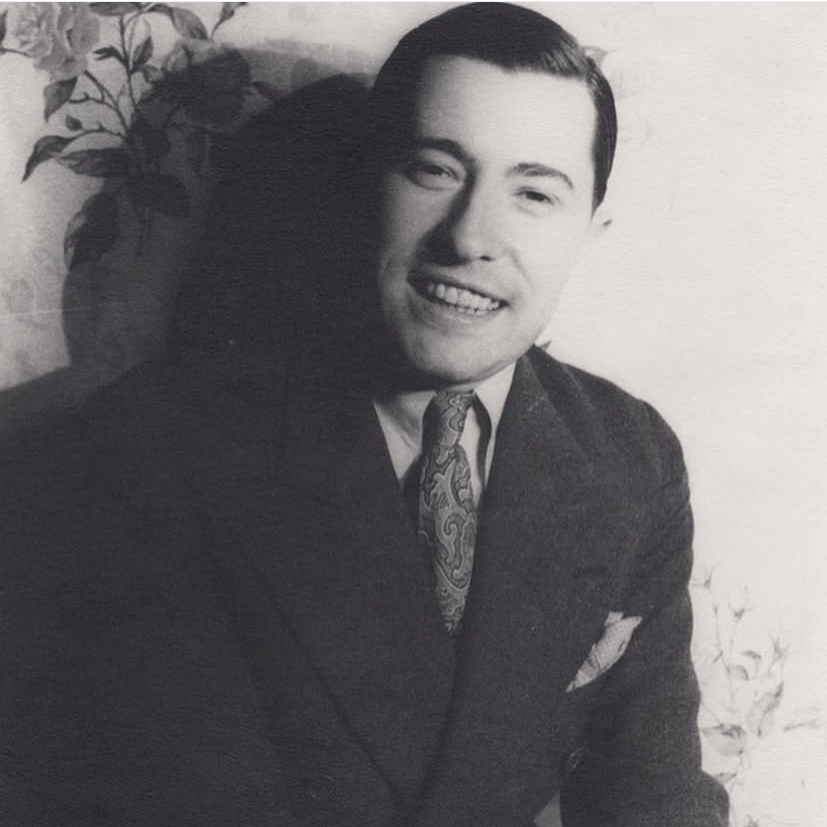
English aristocrat, painter and memoirist Francis Cyril Rose was BOTD in 1909. Born at Moor Park in Hertfordshire, he became the 4th Baronet of the Montreal Roses aged six, inheriting a large fortune. He moved to Paris in his teens where he studied painting with Francis Picabia, and was commissioned by Sergei Diaghilev to paint sets for the Ballets Russes. He befriended Jean Cocteau, who encouraged his art and his sexual inclinations, reportedly inviting 21 rowdy sailors to help celebrate Rose’s 21st birthday. (That’s a lot of seamen). He became the protégé of Gertrude Stein, who (perhaps unwisely) championed him as the next Pablo Picasso, commissioning him to paint her portrait (while circulating filthy stories about his sex life with rent boys). Rose’s lovers included the painter Christopher Wood, writer Samuel Steward and – to the horror of his lefty friends – gay Nazi commandant Ernst Röhm. After Röhm’s execution in 1934, Rose spent three years travelling in Southeast Asia in a yacht with his own private zoo. He became stranded in Peking and addicted to opium, losing most of his fortune after his stockbroker embezzled his funds. He returned to Paris, finding modest success with his 1939 painting L’Ensemble, a sinister group portrait of Cocteau, Stein, Alice B. Toklas, Pavel Tchelitchew, Christian Bérard, Serge Lifar and Natalie Clifford Barney. In 1942, he married the travel writer Dorothy Carrington, travelling with her regularly to Corsica, separating by the mid-1950s. He had a surprise success as the illustrator for The Alice B. Toklas Cookbook, but struggled with poverty for the rest of his life. In 1961, he published a memoir, Saying Life, with unreliable but highly quotable anecdotes about his celebrity friends including Cecil Beaton, Daisy Fellowes, Madame Wellington Koo, Christian Dior, Marchesa Luisa Casati, Oswald Mosley, Charlie Chaplin, Elsa Maxwell and Isadora Duncan. It failed to become the literary success he hoped for, and he lived his final years in poverty, dependent on friends including Beaton for financial support. He made a brief appearance in Kenneth Anger’s 1972 experimental film Lucifer Rising, appropriately cast as Lord Chaos. He died in 1979, aged 79. His reputation was posthumously trashed (or bolstered) by Steward’s 1984 erotic novel Parisian Lives, a thinly-disguised portrait of Rose and his ravenous sex life. In his own memoir, Rose wrote: “If I were to live again in the same circumstances I would not change one minute of the poetry – incomprehensible as it is – of my living.“
Francis Cyril Rose

 Super Gays Born on this Day