
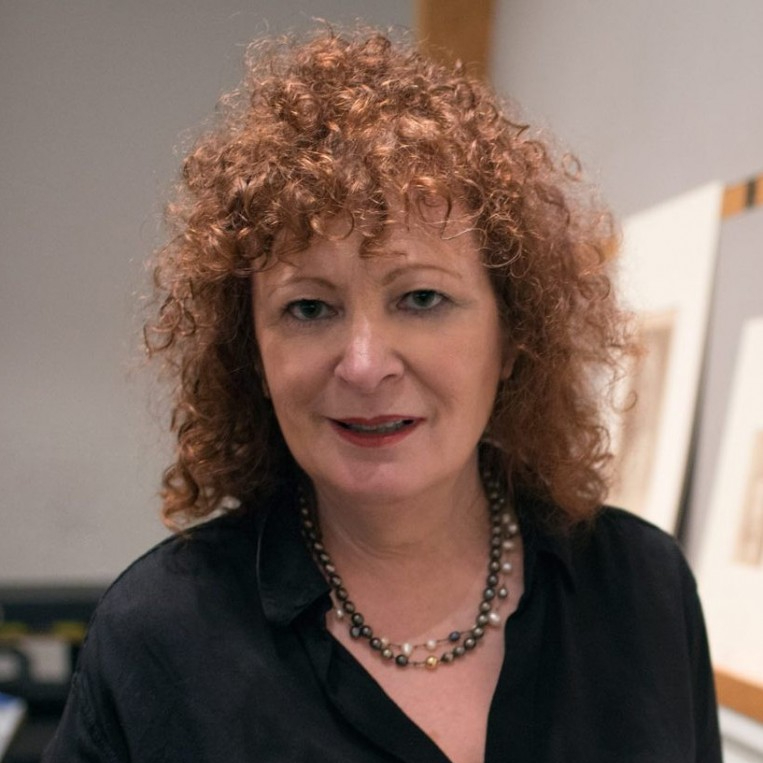
American photographer and activist Nan Goldin was BOTD in 1953. Born in Washington, D.C., she grew up in Boston. She had a turbulent upbringing, leaving school at 13 and living in a series of foster homes, and losing her elder sister to suicide. She began taking photos in her teens, profiling her friendships in the gay and trans community. After studying at the School of the Museum of Fine Arts, she moved to New York City, immersing herself in the bohemian and omnisexual subcultures of the Bowery neighbourhood. She is best known for her 1981 collection The Ballad of Sexual Dependency, a diaristic series of portraits of herself and her friends, intimately depicting their romantic relationships, sex lives, partying and drug use. Initially presented as a slide show in galleries, accompanied by an eclectic musical score, the collection was released in book form in 1986. Combining painterly composition and vivid colours with stark emotional intimacy – including several disturbing self-portraits of Goldin’s injuries inflicted by an abusive boyfriend – Ballad was highly praised, vaulting Goldin to the forefront of New York’s arts scene. Initially presented as a slide show in galleries, accompanied by an eclectic musical score, the collection was released in book form in 1986. Goldin chronicled the devastation of the HIV/AIDS epidemic in her 1992 collection The Family of Nan, an unbearably intimate series of portraits of her sick and dying friends. By the 2000s, she was recognised as one of America’s leading photographers, with retrospective exhibitions at the Whitney Museum of American Art in New York and the Centre Georges Pompidou in Paris. Goldin struggled with drug addiction throughout her life. In 2014, she was prescribed the opioid OxyContin for wrist surgery, quickly becoming addicted, and nearly dying after an overdose of fentanyl. After seeking medical treatment, she re-emerged in 2017, becoming a vocal critic of pharmaceutical companies who pushed the sales of opioids. After forming the advocacy group Prescription Addiction Intervention Now (P.A.I.N), she led a sustained campaign against the Sackler pharmaceutical empire, demanding that they accept responsibility for their role in the crisis. Over several years, Goldin and P.A.I.N. staged “die-ins” at art galleries and museums where the Sacklers were prominent sponsors, including the Metropolitan Museum of Art in New York and the Tate galleries in London. Her efforts to have the Sacklers’ names (and funding) removed from public arts organisations was chronicled in Laura Portras’ 2022 documentary All the Beauty and the Bloodshed, which won the Golden Lion at the Venice Film Festival. Openly queer and bisexual since forever, Goldin’s work is now heralded as an important record of New York’s LGBTQ community and the early years of the HIV/AIDS epidemic. Goldin lives between New York City, London and Paris, and continues to exhibit her work alongside her healthcare activism. Her current relationship status is unknown.
Nan Goldin

 Super Gays Born on this Day