
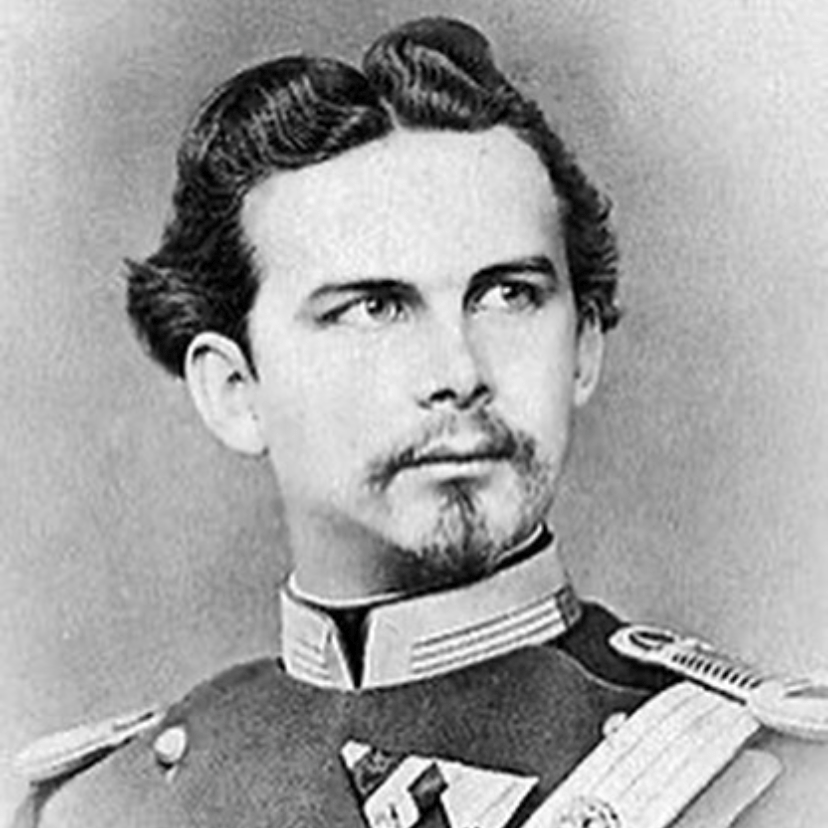
German aristocrat, monarch and arts patron King Ludwig II of Bavaria was BOTD in 1845. Born in Nymphenburg Palace in Munich, he was the eldest son of King Maximilian II of Bavaria. Like many aristocrats, he was raised with unhealthy aristocratic mix of parental neglect, over-indulgence and rigorous exercise, and a sexual relationship with his aide-de-camp Prince Paul of Thurn & Taxis. Following the death of his father in 1864, he became King of Bavaria aged just 18. Two years later, Bavaria was conquered by the Kingdom of Prussia, but retained its independence following German Unification in 1870. Popular with his subjects but despised at court for his lack of interest in state affairs, Ludwig became increasingly reclusive, building and redecorating palaces, financing opera composer Richard Wagner and consorting with a posse of male friends. As well as Prince Paul, his lovers included his equerry Richard Hornig, courtier Alfons Weber, Hungarian theatre actor Josef Kainsmales, and various soldiers and farmhands procured by his stable-master Karl Hesselschwerdt. He became engaged to his cousin Duchess Sophie Charlotte in 1867, but called things off a few months later. After burning through his personal fortune and amassing debts of 14 million marks, his cabinet had him declared insane and he was deposed in 1886 and replaced by his brother Otto. Ludwig was imprisoned in Berg Castle and found dead in Lake Sternberg, aged 40. His death was ruled a suicide by drowning, though it is widely assumed that he was murdered. Ludwig’s palaces are now popular tourist attractions, notably Neuschwanstein Castle which became the model for Walt Disney’s Sleeping Beauty castle. Known as “Mad King Ludwig” and “the Swan King”, his life story inspired Tchaikovsky’s ballet Swan Lake. He was played by Helmut Berger in Luchino Visconti’s 1973 biopic Ludwig.
King Ludwig II of Bavaria

 Super Gays Born on this Day