
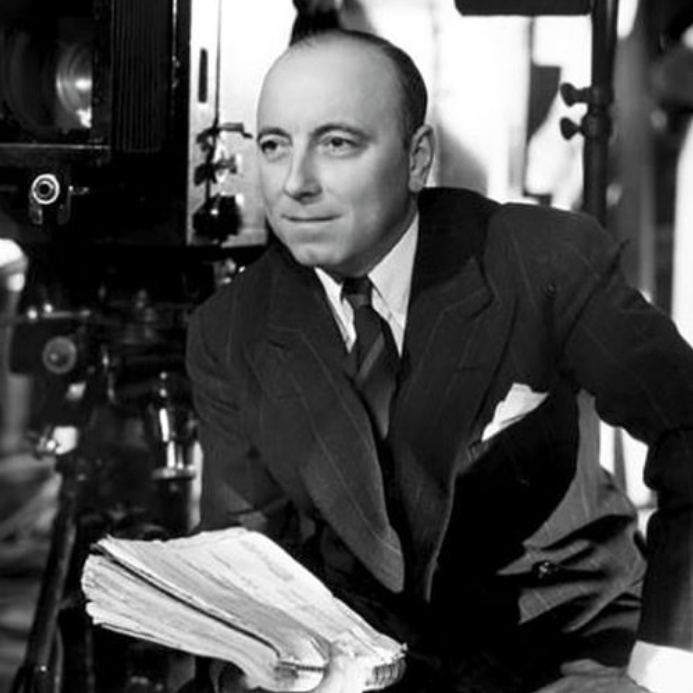
French filmmaker Marcel Carné was BOTD in 1906. Born in Paris to a working-class family, he was raised by his mother after his father’s early death. He began his career as a film critic, editing the film journal Hebdo-Films, and worked as an assistant to filmmakers Jacques Feyder and René Clair. He launched his filmmaking career with the 1936 film Jenny, the first of his successful collaborations with screenwriter Jacques Prévert. They scored critical and commercial success with Le Quai des brumes (Port of Shadows) and Le Jour Se Lève (Daybreak), leading what became known as the French poetic realist movement. He is best known for his historical romance Les Enfants du Paradis (Children of Paradise), based on Prévert’s screenplay about a courtesan and her four lovers. Made in difficult conditions during Nazi-occupied France, it was released in 1945 and became a critical and commercial success, promoted as the French cinema’s response to Gone With the Wind. Their follow-up production Les Portes de la nuit (Gates of the Night), at the time the most expensive French film production ever made, was a box-office and critical failure, and the last film they worked on together. Other than his 1957 hit Les tricheurs (Young Sinners), his remaining films were poorly received by post-war audiences, and his early work was dismissed by French New Wave filmmakers as outdated and sentimental. His last completed film, a documentary about the Bible, was released in 1977. His reputation was reappraised during the 1990s, when Les Enfants du Paradis was voted Best French Film of the Century by a poll of 600 filmmakers and critics. cited. He came out of retirement in 1992 to adapt Guy de Maupassant’s story Mouche for the screen, but became ill during production and abandoned the project. Openly gay, Carné had a long term relationship with the actor Roland Lesaffre, who appeared in many of his films. He died in 1996 aged 90.
Marcel Carné

 Super Gays Born on this Day