
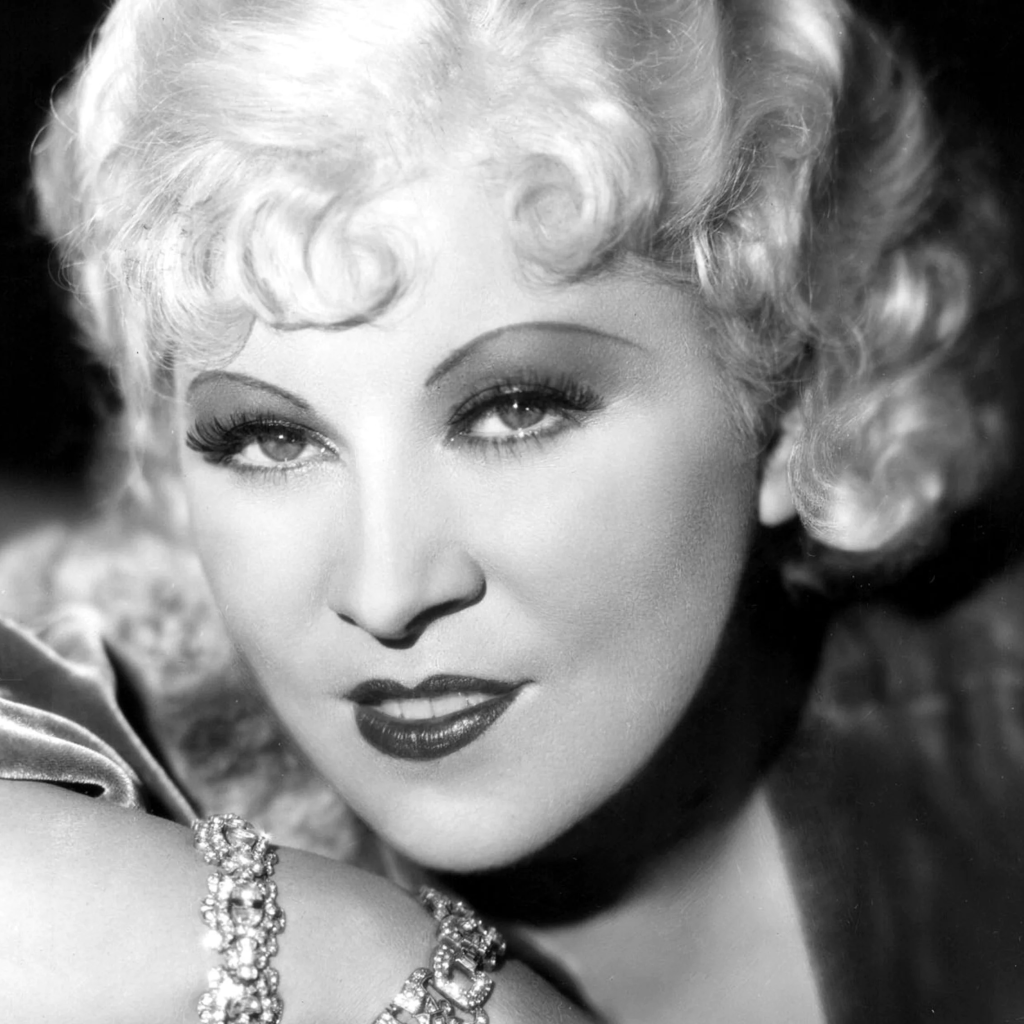
American actress, singer and writer Mae West was BOTD in 1893. Born Mary West in Brooklyn, New York City, she began performing as a child and joined a vaudeville company aged 14. She made her Broadway debut in 1911, and scored a hit in 1918 with her recording of Sophie Tucker’s popular song Everybody Shimmies Now. In 1926, she wrote, produced, directed and starred in the hit play Sex, leading to her arrest and an eight-day jail sentence for offending public morals. Her next play, The Drag, was cancelled before its Broadway run for its frank portrayal of gay life and criticism of conversion therapy. Undaunted, West wrote, produced and starred in the hit play Diamond Lil, and appeared in the 1932 film version She Done Him Wrong, featuring her most famous line “Why don’t you come up sometime and see me?” The film launched the screen career of her co-star Cary Grant, whom she personally selected for the role, reuniting with him in 1933 in the hit comedy I’m No Angel. By 1935, West was the highest-paid actress in Hollywood, beloved for her hourglass figure, husky contralto and breezy double entendres. Surrealist artist Salvador Dalí created several artworks of West, including the Mae West Lips sofa, while Allied soldiers during World War Two named their inflatable life jackets “Mae Wests” in her honour. As the Hays Code became more rigorously enforced in Hollywood, West’s risqué jokes were increasingly the target of censors. She left Hollywood in 1943, returning to the stage and the cabaret circuit. Her 1959 autobiography Goodness Had Nothing to Do With It became a bestseller, and she made several guest appearances on television. She returned to film in the 1970s in the bizarre sex-change comedy Myra Breckinridge, based on Gore Vidal’s novel, and her final film Sextette, co-starring Timothy Dalton and Tony Curtis. Married briefly in her youth, she had relationships with vaudeville star Guido Deiro, her manager James Timony and the African-American boxer William Jones. (When the managers of her apartment building barred Jones from entering, West retaliated by buying the building). Her longest relationship was with Chester Rybinski, a strongman from her Las Vegas stage show and 30 years her junior, which lasted from 1954 to her death in 1980, aged 87. Beloved of gay men and drag queens of a certain age, her most quotable lines include “When I’m good, I’m very good, but when I’m bad, I’m better” and “Too much of a good thing can be wonderful!”
Mae West

 Super Gays Born on this Day