
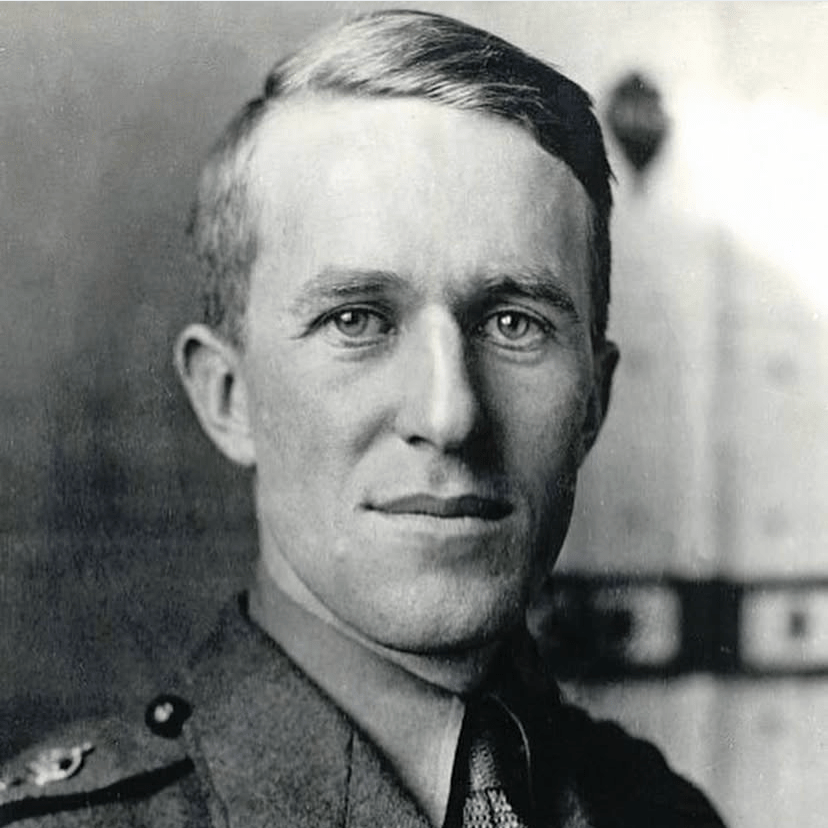
Anglo-Irish soldier, archeologist and writer Thomas Edward (T. E.) Lawrence, also known as Lawrence of Arabia, was BOTD in 1888. Born in Tremadoc in Wales, he was one of five children born out of wedlock to Irish aristocrat Sir Thomas Chapman, who left his marriage to live with the family governess Sarah Maden, settling in England and calling themselves “Mr & Mrs Lawrence”. Learning of his illegitimacy as a teenager, it was both a source of shame and his lifelong identification as an outsider. Lawrence grew up in Oxford and later attended Oxford University, leading to archaeological work for the British Museum in Syria. At the outbreak of World War One, he joined the War Office as a mapmaker, and was assigned to British military intelligence in Egypt. In 1916, he became British military liaison to Emir Fayṣal in the Arab uprising against the Ottoman Empire, and participated in several successful guerrilla campaigns, including the 1917 capture of Aqaba. Abandoning British military uniform for Bedouin dress, he caught the attention of American journalist Lowell Thomas, whose photographs and films of “Lawrence of Arabia” turned him into a cult hero. In 1917, Lawrence was captured by Turkish forces in Dar’ā, where he was tortured and raped by soldiers. After managing to escape, he joined the Arab forces, helping coordinate the capture of Damascus in 1918. Exhausted from years of combat and disillusioned by the British government’s refusal to support an independent Arab state, Lawrence resigned from the Army in 1919, working briefly for the then Colonial Office Minister Winston Churchill, before enlisting in the Royal Air Force as an unranked officer, and working on his memoir Seven Pillars of Wisdom, which he self-published in 1926. His celebrity reignited with the 1927 publication of an abridged memoir, titled Revolt in the Desert, which became an international bestseller. Discharged from the Air Force in 1935, he retired to Dorset, dying a few months later in a motorcycle accident, aged 46. Seven Pillars of Wisdom was republished later that year, though his (heavily eroticised) account of his sexual assault was excised. He befriended many of the leading literary figures of his time, including George Bernard Shaw, Thomas Hardy, Robert Graves, E. M. Forster and Siegfried Sassoon. A lifelong bachelor, he claimed to have no experience of sex, though he lived with an Arab teenager named Dahoum during the war, dedicating Seven Pillars to his memory. In later life, he paid Air Force Cadet John Bruce to flog him with a metal whip until he ejaculated, calling himself “Ted” and Bruce his uncle “R”, describing in his diaries the “delicious warmth… swelling through me” when being beaten, and also writing letters as “R” reporting the floggings of “Ted” to an intermediary. Bruce sold his story to the Sunday Times in 1969, which was serialised as The Secret Life of Lawrence of Arabia. His story was immortalised in David Lean’s Oscar-winning film Lawrence of Arabia, starring Peter O’Toole as a dazzlingly beautiful and queer-inflected Lawrence. Historians and biographers continue to debate the details of Lawrence’s life, noting numerous embellishments and inaccuracies in his writings and querying his shifting allegiances to British and Arab interests. He was also played by Ralph Fiennes in the 1992 TV film A Dangerous Man: Lawrence After Arabia.
T. E. Lawrence

 Super Gays Born on this Day