
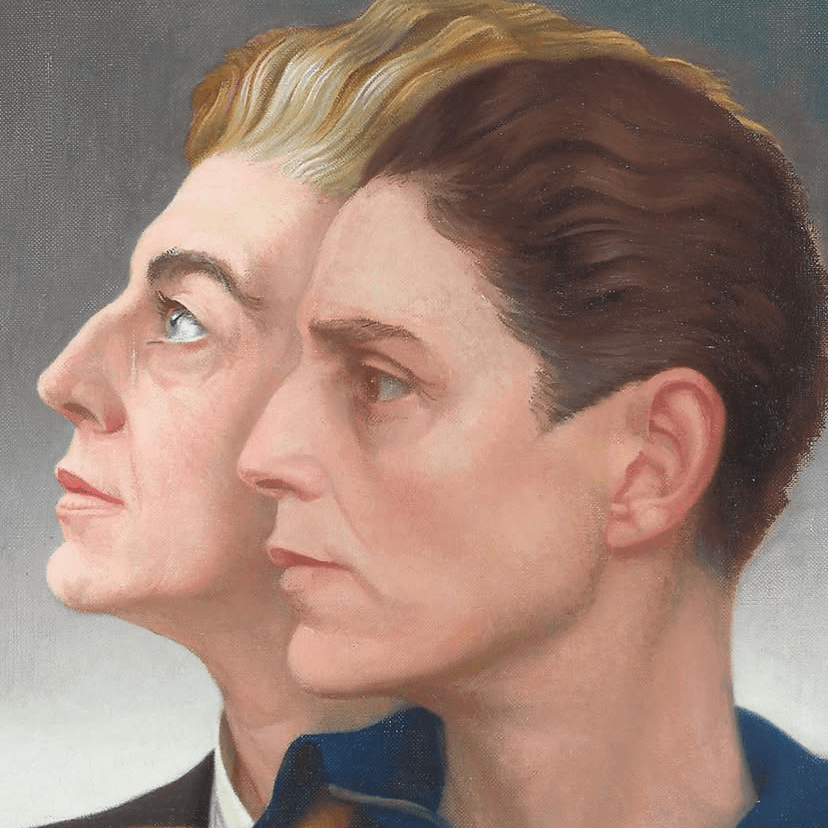
English painter Gluck was BOTD in 1895. Born Hannah Gluckstein in London to a wealthy middle-class family, they were educated in private girls’ schools and studied painting at the St John’s Wood School of Art. In 1916, they moved to the artistic colony of Lamorna in Cornwall with their partner and fellow partner E. M. Craig. In Larmona, Gluck adopted a masculine appearance and dress, insisting on being called “Gluck” without an honorific title, resigning from an art society after being referred to as “Miss Gluck”. Their distinctive appearance was captured in Romaine Brooks’ 1923 portrait Peter (A Young English Girl). They became known for their portraits and floral paintings, only presenting their work in solo exhibitions. In 1926, Gluck returned to London and lived with the author and socialite Sybil Cookson. The following year, they began a relationship with garden designer Constance Spry, with whom they lived in Tunisia. in 1936, Gluck left Spry for writer Nesta Obermer, declaring 25 May their wedding day. Their relationship was immortalised in Gluck’s most well-known painting, Medallion, a double portrait showing their androgynous faces together in profile. Their work was enthusiastically received during the 1930s, featuring in a solo show at the Fine Art Society attended by Queen Elizabeth. In 1936, Gluck began a relationship with the journalist Edith Shackleton Head, living together in Sussex and Cornwall until Head’s death in 1976. Their work became less popular in the 1940s, with the rise of Abstract Expressionism, and they experienced “writer’s block” for nearly 30 years, though spent a decade lobbying the British Standards Institution to create an industry standard for oil paint. They began painting again in their 70s, mounting a successful solo exhibition in 1976. They died in 1978 aged 82, donating most of their paintings to the Brighton Museum & Art Gallery. Interest in their life and work increased in the 1980s, when Virago press used Medallion as the cover image for a reprinting of Radclyffe Hall’s lesbian-themed novel The Well of Loneliness. Gluck is now recognised as a major 20th century painter, and a lesbian and trans icon. In recent years, writers have argued that they should be described using “they/them” pronouns to better reflect their non-binary gender identity.
Gluck

 Super Gays Born on this Day