
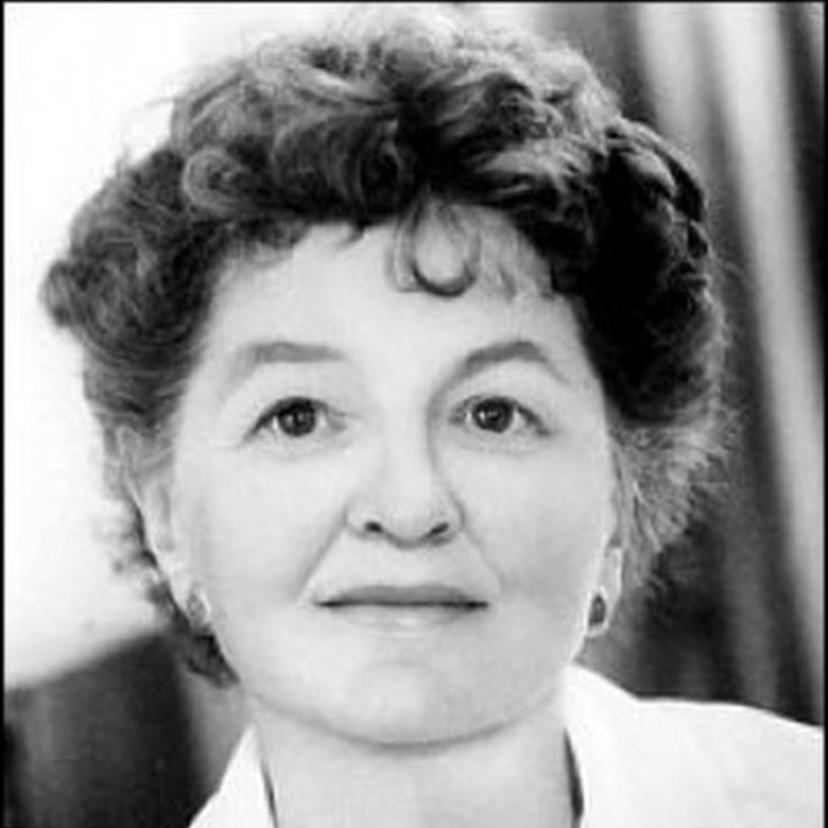
Anglo-Australian writer Pamela Travers, better known by her pen-name P. L. Travers, was BOTD in 1899. Born Helen Goff in Maryborough in rural Queensland to English-born parents, her bank manager father bankrupted the family and died when she a was a teenager. She moved with her mother and sisters to Bowral in New South Wales, where she attended boarding school . After a brief career as a secretary, she became an actress, joining a touring repertory company and performing under the name Pamela Travers. In 1922, she began publishing poetry in the erotic magazine The Triad, and wrote a regular column for the Christchurch Sun newspaper in New Zealand. She moved to London in 1924 to continue her literary career, working as a correspondent for Australian newspapers and writing literary reviews for The New English Weekly. While largely uninterested in social life, she befriended Irish poet W. B. Yeats, studied psychoanalysis with Carl Jung in Switzerland, and became a disciple of the mystic-philosopher George Ivanovich Gurdjieff. In 1934, she published a collection of her letters from a visit to the Soviet Union. Months later, she published her debut novel Mary Poppins, a story about a no-nonsense nanny with magical powers who takes charge of a middle-class English family. It became an immediate international success, vaulting her to literary celebrity. During World War Two, she worked for the British Ministry of Information, and was posted to the United States. She returned to London after the war, and spent nearly a decade resisting overtures from American filmmaker Walt Disney to adapt Mary Poppins for the screen. By 1961, short of money, she finally agreed to sell Disney the film rights, and flew to Los Angeles to oversee the film’s development. Horrified by Disney’s plans to turn her story into a movie musical, she fought relentlessly with him and songwriters Robert and Richard Sherman, taking particular exception to the song
Supercalifragilisticexpialidocious. Despite her objections, Mary Poppins was released in 1964. It became a box office juggernaut, nominated for 13 Oscars, winning Best Picture and launching the film career of Julie Andrews, who also won an Oscar for her pitch-perfect performance as Mary. Travers continued to protest Disney’s saccharine treatment of her book, even insisting at the film’s premiere that he remove the film’s animated sequences. The film’s success made her wealthy, and she continued to write prolifically, publishing a tribute to her great-aunt Helen Morehead, whom she credited as the inspiration for Mary, and several books of myths and fairytales. Travers never married, but had an intense relationship with her “live-in companion” Madge Burnand for over a decade. In 1939, she adopted a son whom she named Camillus. Bizarrely, she told him that she was his birth mother, a lie only revealed when he was 17 and unexpectedly met his twin brother. Perhaps understandably, he and Travers became estranged by the time he reached adulthood. She died in 1996 aged 96. A stage musical production of Mary Poppins, sanctioned by Travers before her death and written by Julian Fellowes, opened in London in 2004. She was played by Emma Thompson in the 2013 film Saving Mr Banks, based on her combative relationship with Disney.
P. L. Travers

 Super Gays Born on this Day