
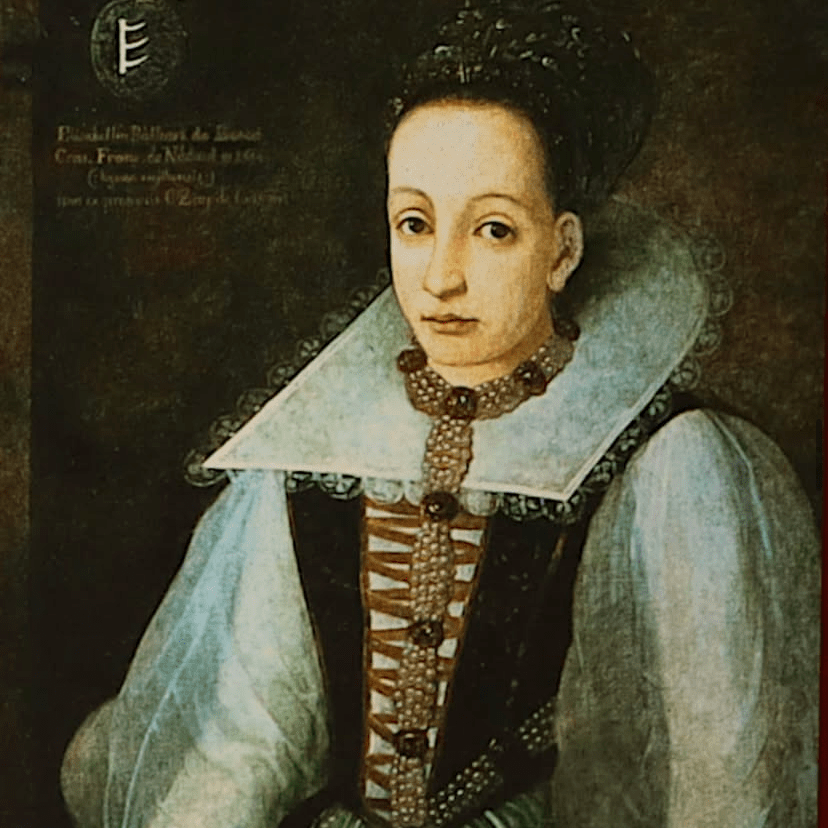
Hungarian aristocrat and folk legend Countess Elizabeth Báthory was BOTD in 1560. Born to a baron and a countess, she was highly educated, learning Hungarian, German, Latin and Greek. In 1573 she married Count Ferenc Nádasdy, with whom she had eight children. As commander-in-chief of the Hungarian army, Nádasdy spent many years abroad fighting the Ottoman Empire, leaving Báthory to run their estate. After his death in 1694, Báthory was put on trial for the torture and murder of over 300 servant girls. Historians are divided as to whether her crimes were genuine, or concocted by her rivals as a way of seizing her land. She was confined to house arrest in her castle for the remainder of her life, dying in 1614 aged 54. Legends describing Báthory as a sadistic lesbian who bathed in her victims’ blood were published over 100 years later, becoming part of local folklore. Her legend also inspired Sheridan Le Fanu’s lesbian vampire story Carmilla and Leopold von Sacher-Masoch’s novella Eternal Youth, though there is no evidence that Bram Stoker referenced her when writing Dracula. Despite scant historical evidence, Báthory’s reputation as a blood-bathing lesbian psychopath has stuck, inspiring a number of books, films and plays. Notable film portrayals include the 1936 horror film Dracula’s Daughter starring Gloria Holden as a lesbian-coded vampiric countess; the Hammer Horror film Countess Dracula starring Ingrid Pitt and the French erotic drama Contes immoraux (Immoral Tales) starring Paloma Picasso, both released in 1973; the blood-soaked 2008 historical drama Báthory: Countess of Blood starring Anna Friel; 2009’s The Countess, written, directed by and starring Julie Delpy; and 2026’s Die Blutgräfin (Blood Countess), a queer vampire comedy directed by Ulrike Ottinger and starring Isabelle Huppert.
Elizabeth Báthory

 Super Gays Born on this Day