
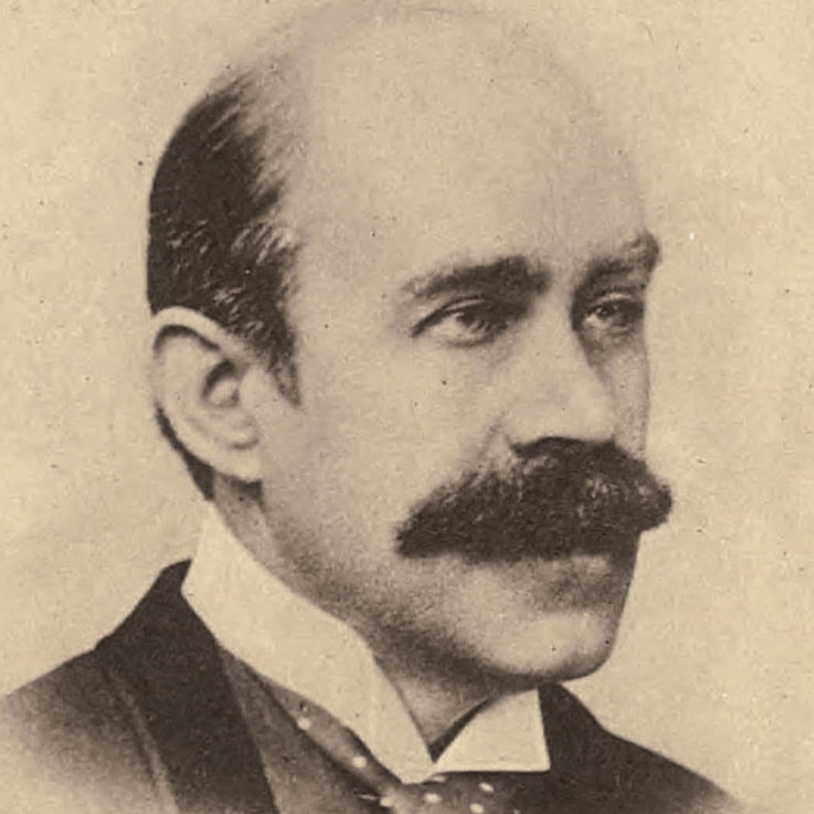
English writer and critic Walter Pater was BOTD in 1839. Born in London to a middle-class family, he developed an early interest in art and architecture. After studying classics at Oxford University, he remained in Oxford and took up an academic post, publishing articles on the Romantic poets, William Morris and Renaissance art. His essays and criticism were collated and published in the 1873 book Studies in the History of the Renaissance. In his final essay, The Renaissance, he argued that art should exist for the sake of its beauty alone, and not be assessed for their moral or educational value. Much of his writing focused on Platonic ideals of male beauty and friendship that may or may not have had a sexual subtext. His “Art-for-Art’s-Sake” theory and celebration of Renaissance art became highly influential on the Pre-Raphaelite art movement and writers Algernon Charles Swinburne and Oscar Wilde. Others were less impressed, with many conservative critics accusing Pater of promoting amorality and hedonism. In 1874, he was turned down for a proctorship at Oxford when his love letters to 19 year-old undergraduate William Hardinge were discovered. He left the university and continued writing, eventually returning to teaching in 1893 as his fame developed. He socialised within a largely homosexual circle including Swinburne, Gerald Manley Hopkins, George Moore and Simeon Solomon. In his review of Wilde’s novel The Picture of Dorian Gray, he disapproved of what he viewed as Wilde’s corruption (ie sexualising) of the Platonic theories of sexless man-boy love. A lifelong bachelor, Pater died in 1894 aged 54. His beliefs in the importance of subjective experience in consuming art became hugely influential on 20th century literature and criticism, particularly in the works of Marcel Proust, James Joyce, William Butler Yeats and T. S. Eliot.
Walter Pater

 Super Gays Born on this Day