
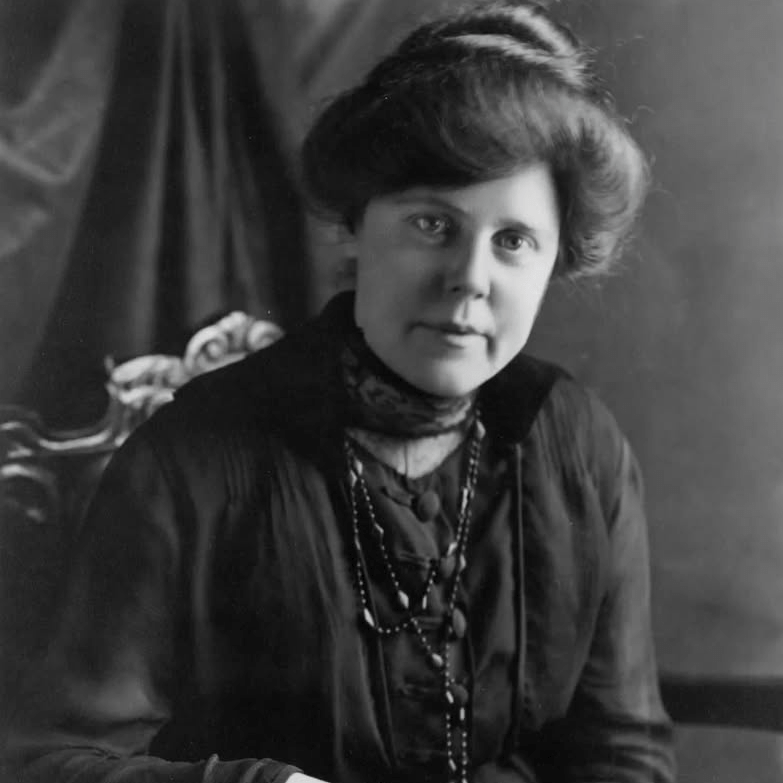
American suffragette Lucy Burns was BOTD in 1879. Born in Kings County (now Brooklyn), New York to a wealthy middle-class family, she was a gifted student, attending Columbia University, Vassar College and Yale University. After graduating, she worked as an English teacher, before moving to Germany in 1906 to study at the University of Bonn. In 1909, she travelled to England, where she met suffragette leader Emmeline Pankhurst and her daughters Christabel and Sylvia. She quickly abandoned her studies, staying in England and joining the Pankhursts’ political campaigns for female suffrage. Arrested after attending her first protest, she was imprisoned and joined an organised hunger strike, eventually being force-fed. After her release from prison, she and fellow American Alice Paul returned to the United States in 1912, intent on reinvigorating the American suffrage movement. Their radical tactics drew criticism from the more moderate National American Women Suffrage Association, who eventually cut ties with them. In 1916, Burns and Paul established the National Women’s Party, continuing to advocate for women’s rights and the vote. Arrested for picketing outside the White House, Burns was repeatedly imprisoned during 1917 and 1918, experiencing brutal treatment and force-feeding in prison. In 1920, federal suffrage for women was finally passed. Burns retired from political life soon after, devoting herself to the Roman Catholic Church and raising an orphaned niece. She appears to have had no intimate relationships, though biographers have speculated whether her friendship with Paul was also sexual. Burns died in 1966, aged 87. In 2020, a museum was named in her honour on the site of the Occoquan Workhouse in Virginia, where she had been repeatedly imprisoned.
Lucy Burns

 Super Gays Born on this Day