
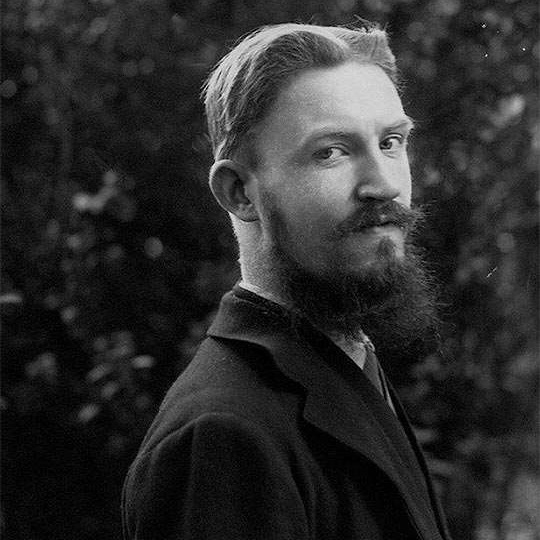
Irish playwright, critic and activist George Bernard Shaw was BOTD in 1856. Born in Dublin to an impoverished Anglo-Irish aristocratic family, he left school at 16 to work as a clerk. He moved to London in 1876, educating himself via extensive reading at the British Library. After several failed attempts to publish fiction, he become involved in left-wing politics, helping co-found the Fabian Society in 1884 and edit its magazine. He became a popular drama and music critic for several London newspapers, writing plays in his spare time. Inspired by the social realist dramas of Henrik Ibsen and the subversive drawing-room comedies of his friend Oscar Wilde, he explored social injustice under a veneer of humour, scoring major hits with his feminist-themed social comedies Mrs Warren’s Profession andCandida and his satire John Bull’s Other Island. In his 1905 comedy Major Barbara, a battle of wills between an idealistic young Salvation Army majorette and her weapons manufacturer father, he wittily satirised do-gooder leftist politics. He is best known for his 1913 comedy Pygmalion, in which linguistics professor Henry Higgins trains Cockney flower girl Eliza Doolittle to pass as a lady in high society. A scene in which Eliza appears at a tea party, speaking in a refined accent but with little idea of polite conversation, is widely regarded as a masterpiece of comic writing. Filmed in 1938 by Anthony Asquith, Shaw won an Oscar for his contribution to the screenplay. He also won acclaim for his 1924 play Saint Joan, a lively political drama based on the trial of Joan of Arc, winning him the Nobel Prize for Literature. His extraordinarily prolific literary output continued alongside his political work for the next three decades, with notable plays including Arms and the Man, Caesar and Cleopatra, Man and Superman, Androcles and the Lion and Heartbreak House. His complex and often contradictory political views included endorsing vegetarianism, eugenics and the dictatorship of Joseph Stalin, while disapproving of vaccines and apostrophes. Shaw married Charlotte Payne-Townshend in 1898, after she nursed him back to health following a long illness. Their marriage was loving, though by mutual agreement sexless, and they reminded together until her death in 1943. He also pursued friendships with actresses Ellen Terry and Mrs Patrick Campbell (which appear to have been unconsummated) and with Marlene Dietrich, who claimed later that they had been lovers. Shaw’s sexuality has been extensively debated by biographers, arguing variously that he was asexual, a closeted homosexual or a ravenous heterosexual. He remained active in public life until his death in 1950, aged 94. Now considered one of the greatest writers of the 20th century, his plays are still regularly performed around the world, while Pygmalion enjoyed renewed popularity as the basis for Lerner & Loewe‘s hit musical My Fair Lady. His work is cited as a major influence on playwrights Tom Stoppard and Tony Kushner.
George Bernard Shaw

 Super Gays Born on this Day