
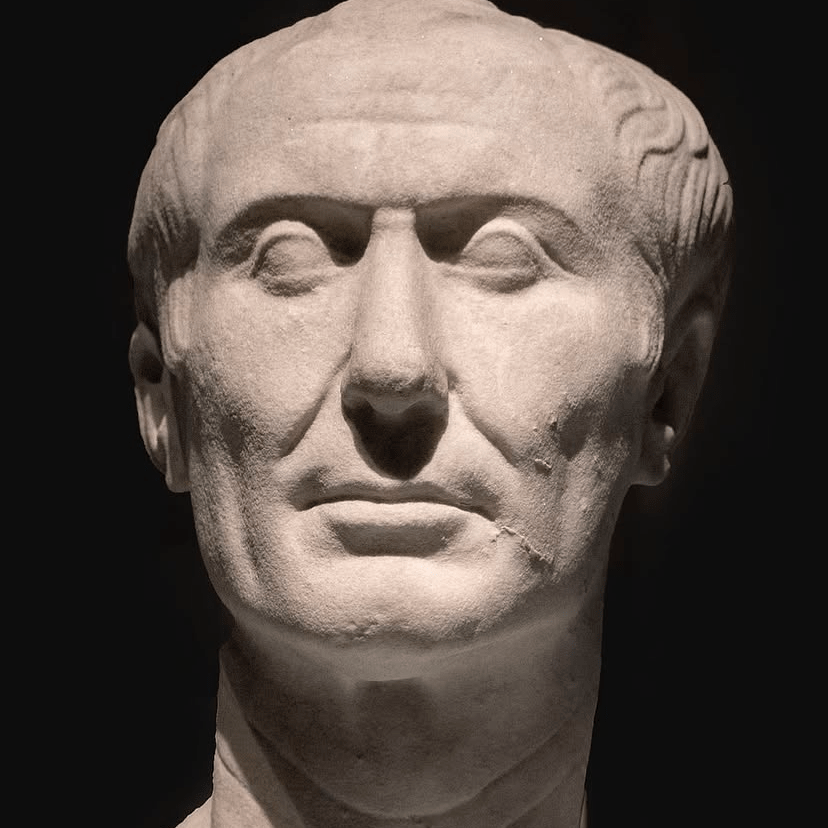
Roman emperor Gaius Julius Caesar was (probably) BOTD in 100 BCE. Born in Rome to a prominent patrician family, Caesar was supposedly born via a surgical procedure now known as a Caesarian section, though as his mother lived until he was 50, this seems unlikely. In 84 BCE, aged 16, he married Cornelia, a prominent nobleman’s daughter, though was exiled after Cornelia’s father objected to the marriage. He joined the Roman Army, inheriting his father’s position as governor of the province of Asia (in modern-day Turkey). Returning to Rome in 78 BCE, he worked as a legal prosecutor, and studied oratory and rhetoric. After his wife’s death in 69 BCE, he married the noblewoman Pompeia, working his way up the political ladder from quaestor to praetor. A successful military expedition restored his fortune, allowing him to stand for consulship in 59 BCE. He captained the Roman Army in the Gallic Wars, successfully invading Gaul (modern-day France) and extending the Empire’s reach into Britain. Resisting attempts that he give up his command, he led his troops across the Rubicon river and into Italy, igniting a civil war. After crushing his opponents, he assumed dictatorial control of the Republic in 45 BCE. During his brief tenure as leader, he wrote and published several accounts of his military campaigns, and had his birth month renamed “Julius” in his honour. Married a third time to Calpurnia, he also had an affair with the Egyptian queen Cleopatra. Rumours of his homosexuality persisted throughout his life, including an affair with King Nicomedes IV of Bithynia, earning him the nickname “Queen of Bithynia”. (A satirical song of the time said “Caesar may have conquered the Gauls, but Nicomedes conquered Caesar”). His populist and authoritarian policies made him unpopular in the Senate, prompting several assassination plots. He was stabbed to death by a group of Senators on 15 March 44 BCE (now referred to as the “Ides of March”), led by his friend Marcus Junios Brutus. He was 55. His life and reign inspired a number of literary texts, most notably William Shakespeare‘s play Julius Caesar, presenting him as a charismatic but flawed ruler whose pretensions to tyranny prompt his overthrow. He was portrayed onscreen by Louis Calhern and John Gielgud in Hollywood film versions of Shakespeare’s play.
Julius Caesar

 Super Gays Born on this Day