
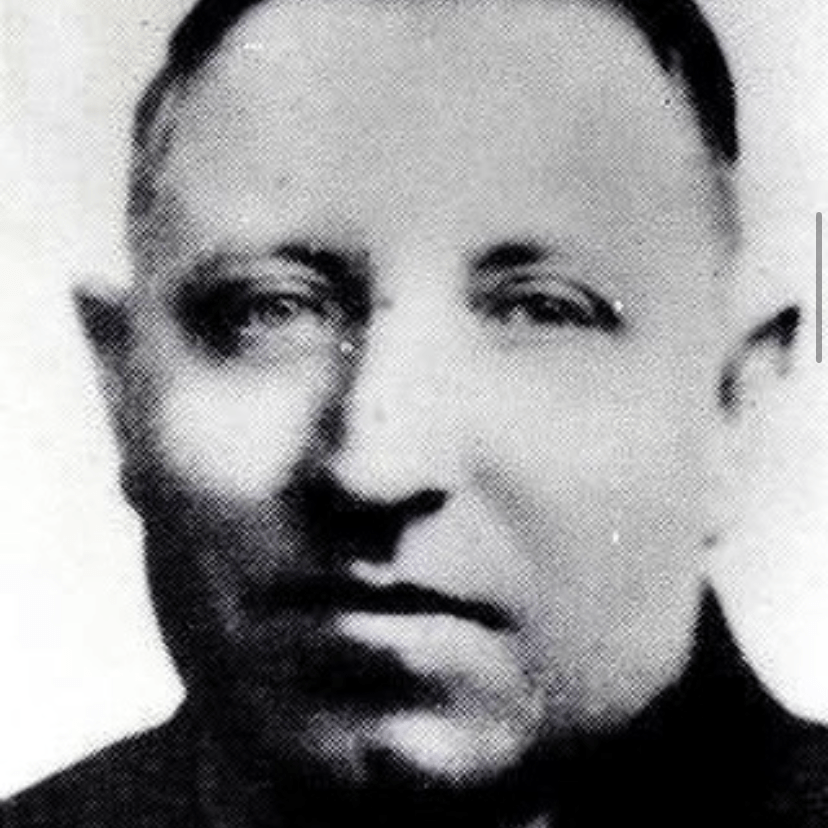
German activist Henry Gerber was BOTD in 1892. Born Heinrich Dittmar in Passau in the Kingdom of Bavaria, little is known about his early life. In 1913, he and his family emigrated to the United States, settling in Chicago and adopting the surname Gerber. Openly gay from his childhood, he was briefly institutionalised in 1917. During World War One, Gerber joined the US Army rather than be interned as an enemy alien. Assigned to Coblenz in Germany, he spent three years working as a proofreader for the Allied Army of Occupation. While in Germany, he learned about the work of sexologist Magnus Hirschfeld, travelling to Berlin and immersing himself in the city’s burgeoning queer nightlife. After the war, he returned to Chicago and worked as a postal clerk. Inspired by Hirschfeld’s work, he founded the Society for Human Rights in 1924, to protect the interests of “people who by reasons of mental and physical abnormalities are abused and hindered in the legal pursuit of happiness”, now thought to be the first gay rights organisation in the United States. He also briefly edited the magazine Friendship and Freedom, which folded after two issues over fears of obscenity prosecutions. The following year, the Society was reported to the police. Gerber and his associates were arrested and tried for immorality offences. He was eventually acquitted, though the resulting publicity caused him to lose his job, while his legal fees swallowed his life savings. The Society was closed, and an embittered Gerber moved to New York City in 1927 and re-enlisted in the Army, undertaking office work at Fort Jay on Governors Island. During the 1930s, he ran a pen pal service called “Connections” and wrote articles advocating for gay rights, mostly published under a pseudonym. After receiving an honourable discharge from the Army in 1945, he moved to Washington, D.C., joining the local chapter of the Mattachine Society and relating his experiences in Germany and Chicago to the gay periodical ONE. He retired to the Soldiers’ and Airmen’s Home in Washington, living to see a new wave of gay liberationist politics following the 1969 Stonewall Riots. He died in 1972 aged 80. In 1992, he was posthumously inducted into the Chicago Gay and Lesbian Hall of Fame. His former home in Chicago, where he founded the Society for Human Rights, was designated as a National Historical Landmark in 2015.
Henry Gerber

 Super Gays Born on this Day