
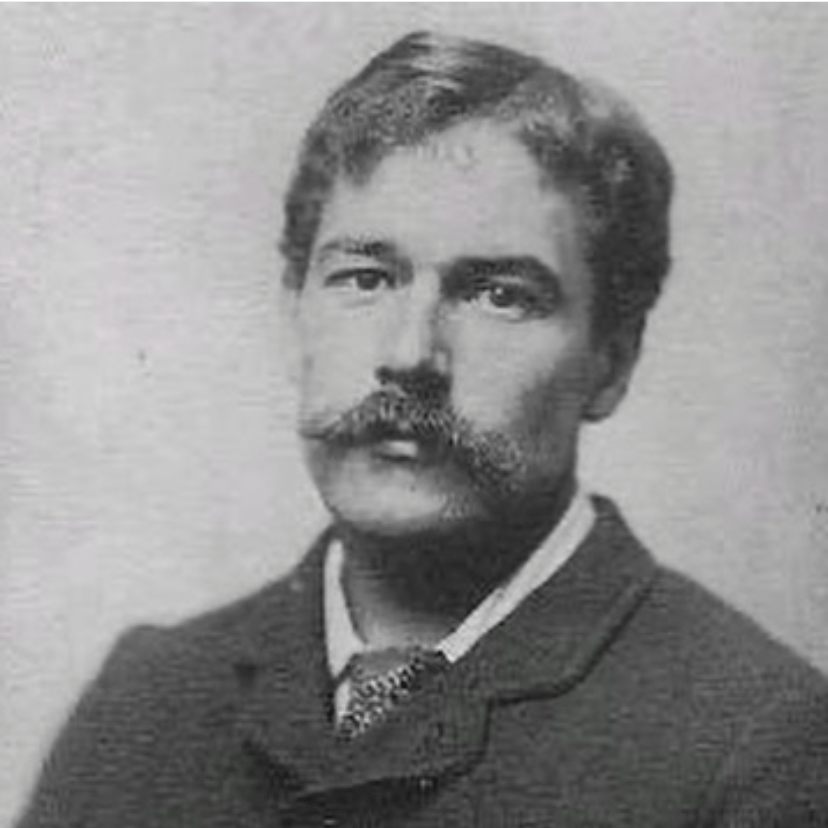
English painter Henry Scott Tuke was BOTD in 1858. Born in York into a prominent middle-class family, his father was a psychiatrist and social reformer. He was raised in Falmouth, Cornwall, where he developed an early interest in drawing and painting. In 1874, he moved to London to study at the Slade School of Art, then travelled to Italy, where he painted his first series of young male nudes. He settled in Paris in 1881, where he befriended the painter John Singer Sargent. Returning to England in 1883, he moved to Newlyn in Cornwall, working briefly with the artists’ colony known as the “Newlyn School”, before returning to his childhood home in Falmouth. He became known for his paintings of local adolescent boys, painted in the open air rather than studios and typically depicted swimming, sunbathing or in fishing boats. He also became a respected maritime artist, producing a number of well-regarded paintings of military ships and fishing vessels. He had a significant relationship with one of his models Edward “Johnny” Jackett, remaining lifelong friends even after Jackett’s marriage. Tuke visited London regularly, exhibiting his paintings at the Royal Academy of Arts, and befriending celebrity homosexuals Oscar Wilde, John Addington Symonds and Horatio Forbes Brown. Elected to the Royal Academy in 1900, he earned enough income from his work to travel extensively though France, Italy and the West Indies. As his fame grew, he was commissioned to paint a number of celebrity portraits, notably the soldier-adventurer T. E. Lawrence. He died in 1929 aged 70. His work fell into obscurity after World War Two, with the rise of Modernism and abstract movements. He was discovered in the 1970s by gay art critics, and began to be collected by celebrities including Elton John. His work featured prominently in Tate Britain’s 2017 show Queer British Art.
Henry Scott Tuke

 Super Gays Born on this Day