
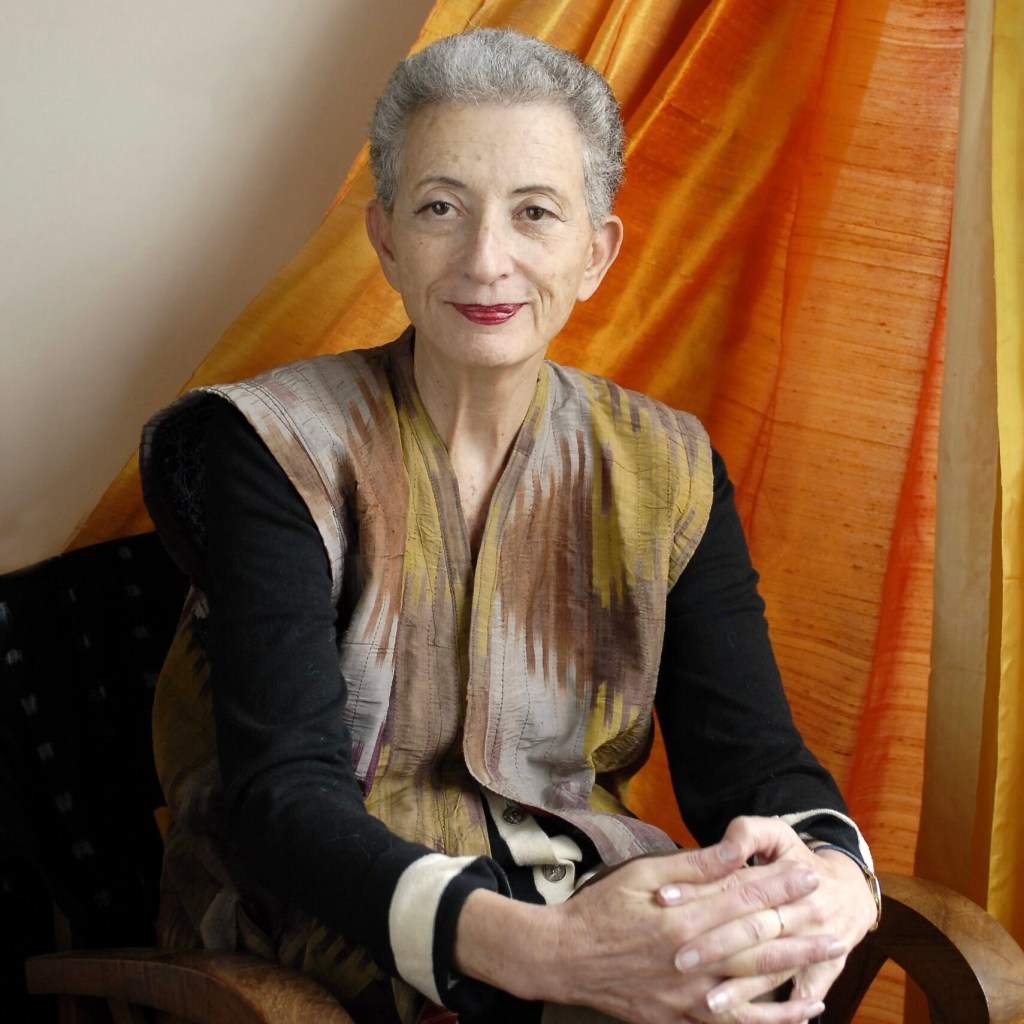
French writer and philosopher Hélène Cixous was BOTD in 1937. Born and raised in Oran in French-controlled Algeria, she and her family were expelled during the Algerian War of Independence. Settling in Paris, she studied at the University of Paris where she studied English literature and married Guy Berger, with whom she had three children. She became a lecturer at the University of Bordeaux and the Sorbonne, divorcing Berger in 1964 and earning her doctorate in 1968. During the 1968 student riots, Cixous helped establish the University of VIII-Vincennes, intended as an alternative to traditional pedagogy, and assumed a professorship in English Literature. The following year, she published her first novel Dedans (Inside), winning the Prix Médicis. She became a prominent figure in post-war feminist theory, drawing from the post-structuralist theories of Ferdinand de Saussure and Jacques Derrida to examine how language systems classify and constrain female identity. She is best known for her 1975 essay Le Rire de la Méduse (The Laugh of the Medusa), in which she re-interpreted the monster-myth of Medusa as a symbol of female power, and encouraged the development of écriture féminine, a mode of writing by and for women about their personal experiences. She continued her analysis and re-interpretation of female characters from Classical mythology in 1983’s Le Livre de Promethea (The Book of Promethea). She also began writing plays from the early 1970s, notably Portrait de Dora (Portrait of Dora), a dramatisation of Sigmund Freud’s case study of his patient Ida Bauer (anonymised as “Dora”), highlighting the biases and inaccuracies in his analysis. She earns Supergay honoraire (Honorary SuperGay) status for her influence on the development of lesbian feminist theory, notably in the work of her former student Luce Irigaray. Cixous continues to teach in Paris and at the European Graduate School in Switzerland.
Hélène Cixous

 Super Gays Born on this Day